 AyurVeDish®
About us
Why AyurVeDish ExistsAyurveda at Our HeartOur Free-From PromiseWhole Food, Plant-Based LivingWhy Grain FreeWhy Oil FreeWhy Dairy FreeWhy Yeast FreeWhy Cane Sugar FreeWhy Soy FreeWhy Thoughtful IngredientsFresh and SeasonalHerbs and SpicesFood from Around the WorldGood Food for EveryoneA Recipe Should Inspire YouEat to LiveSalt, Spice and BalanceAyurveda
Ayurveda Made SimpleThe Five ElementsThe Three DoshasVataPittaKaphaPrakritiYour Dosha CombinationEating for Your ConstitutionChoosing Foods ThoughtfullyThe Six TastesSix Tastes on One PlateFood QualitiesAgni (Fire)Herbs and Spices in the Ayurvedic KitchenEating With the SeasonsAyurveda and the Body ClockFasting: The Ancient PauseBuilding a Plant-Based Ayurvedic MealAyurveda and Modern NutritionFood Combinations and Meal PlanningShop
Speciality All-in-One BlendsGrain Free Rice-Style BlendsSnack & Savoury PremixesGrain Free FloursBakes & DessertsChutneys, Dips & PicklesTadkas & Finishing SpicesDetox & Ayurvedic TeasHot & Cold Drinks





Pitta
Pitta: Fire and Water, the Dosha of Transformation
Think of a flame under a pot. It changes whatever it touches: raw becomes cooked, hard becomes soft. That is the picture the ancients used for Pitta, the dosha of transformation, warmth and digestion.
Pitta is led by fire and held together by water. Fire gives it heat and sharpness. Water keeps that heat from becoming a blaze. It is a dosha of focus, drive and intensity.
The Qualities of Pitta
Pitta is described through heat, sharpness and fluidity. In everyday life these show as a strong appetite, a sharp mind, a love of getting things done and a body that runs warm. In balance, the traditions describe courage, clarity and a good, steady appetite. A flame that is tended well is a warm and welcome thing.
What the Ancient Texts Say
The Charaka Samhita (Sutrasthana 1.60) describes Pitta as mildly oily, hot, sharp and fluid, and the Ashtanga Hridaya (Sutrasthana 1.11) agrees. The Sushruta Samhita (Sutrasthana 15) names five forms of Pitta, each with its own work: colour, digestion, intellect, sight and warmth. The ancients saw one dosha doing many jobs, all of them about change.

Pitta and Food
The idea is simple. A warm, sharp dosha is balanced by cooling, gentle food. The Charaka Samhita (Sutrasthana 1.66) lists sweet, bitter and astringent tastes as those that pacify Pitta, and pungent, sour and salty tastes as those that increase it.
In a plant-based kitchen that points to cucumber, leafy greens, courgettes, fresh coriander, mint, naturally sweet fruits and mild lentil dishes. Flavour never has to mean overwhelming heat, and you choose the level that suits you.
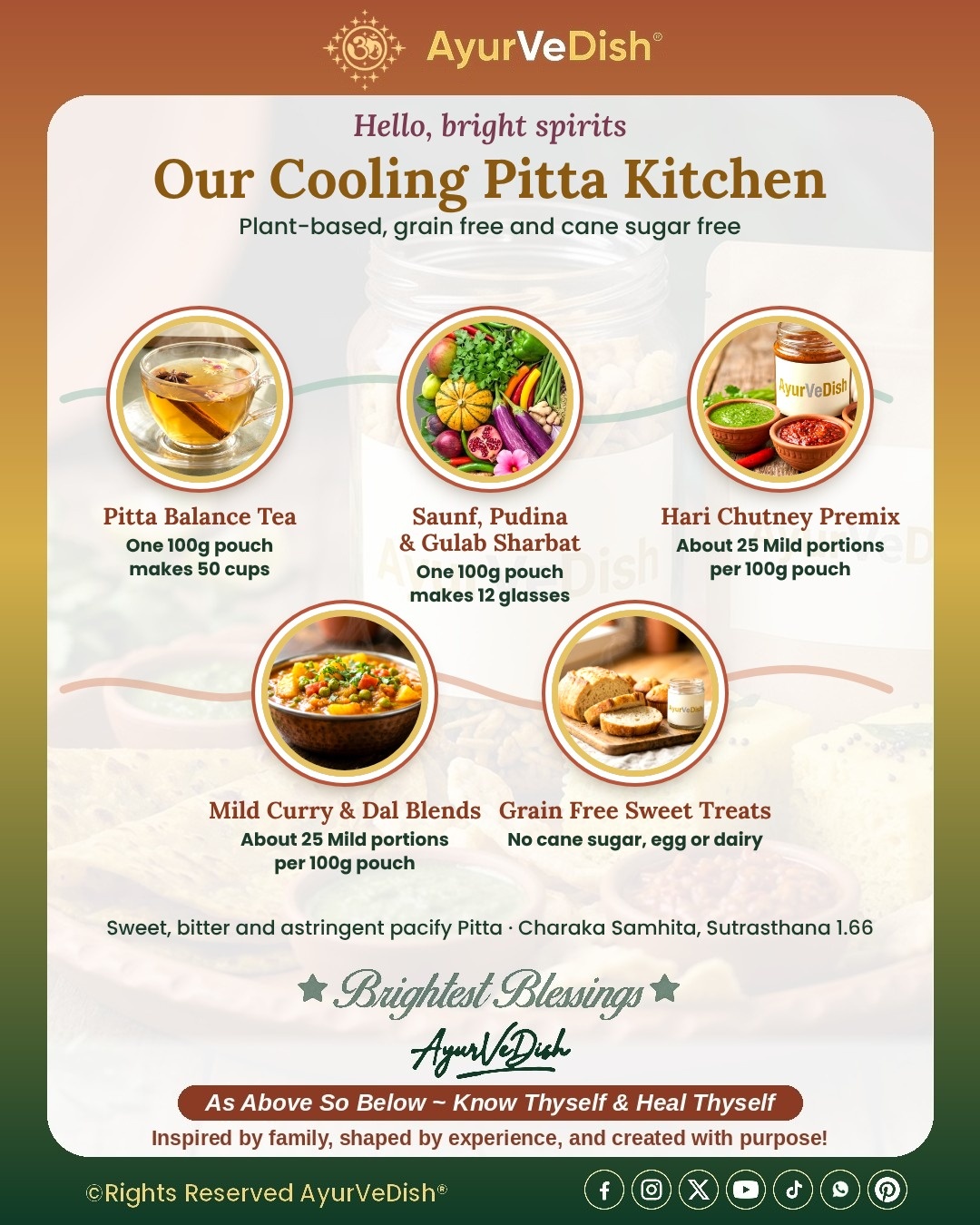
How We Cook for Pitta
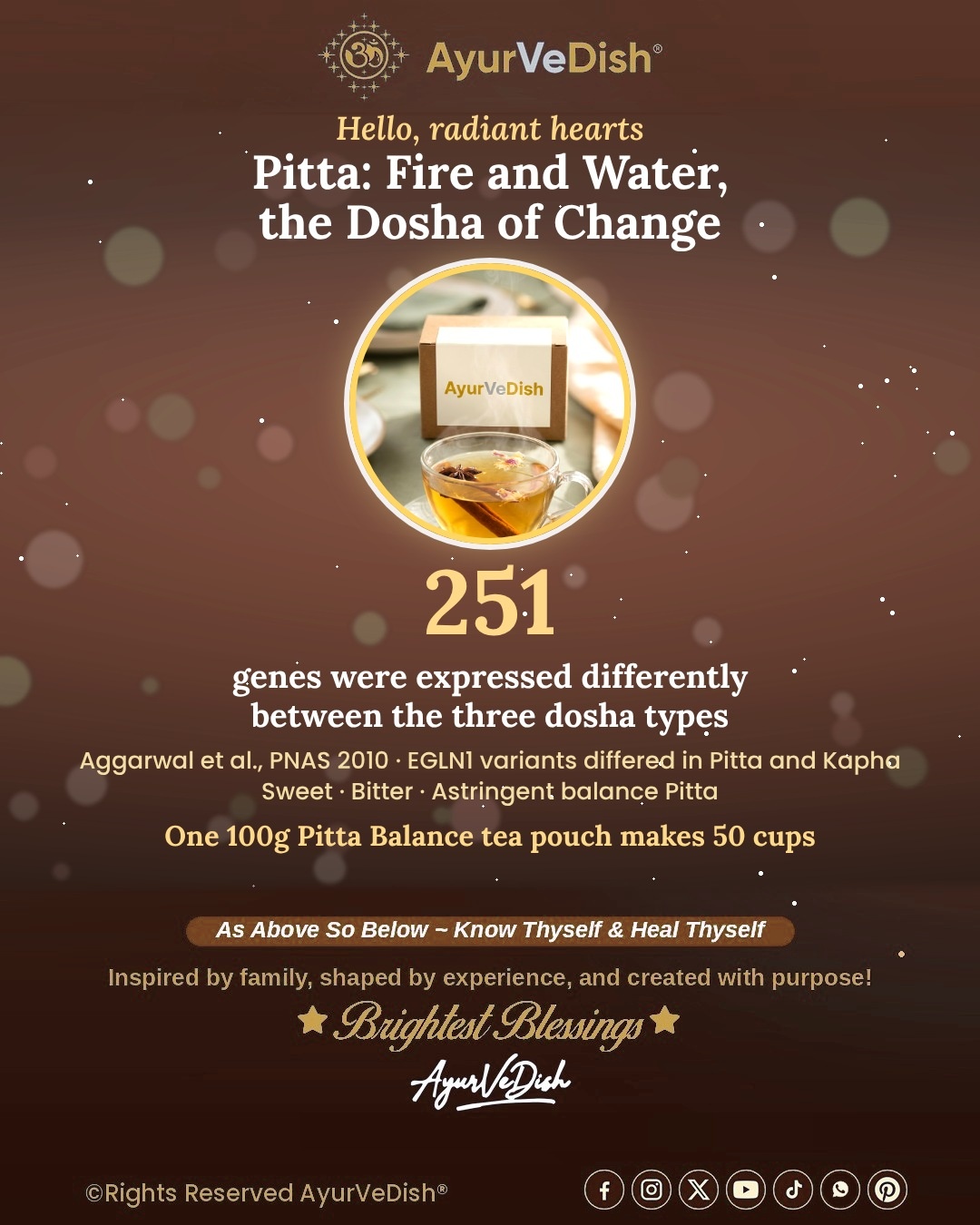
Our Pitta Balance herbal tea is caffeine free: fennel (saunf) 25%, coriander (dhana) 22%, mint (pudina) 16%, rose (gulab) 12%, green cardamom (elaichi) 10%, cumin (jeera) 8%, amla 4% and vanilla 3%. One level teaspoon (2g) in 200ml, steeped for 5 to 7 minutes, makes a cup, so one 100g pouch makes 50 cups. Cool it to room temperature, no ice needed.
Our Saunf, Pudina and Gulab Sharbat is a cooling drink of fennel, mint and rose, sweetened with coconut sugar (nariyal gur) and free of cane sugar. Stir 8g into 250ml of cold water, no cooking, and one 100g pouch makes 12 glasses.
Our Hari Chutney premix of fresh coriander, mint and green chilli comes in three heat levels, and Mild suits Pitta well. One 100g pouch makes about 25 portions at Mild (4g), 14 at Medium (7g) and 10 at Extra Hot (10g), each per 100g of plant-based yoghurt. Finish with lemon juice.
Our curry and dal blends come in Mild and Medium too. One 100g pouch gives about 25 portions at Mild (4g), 14 at Medium (7g) and 10 at Extra Hot (10g) per 200g of vegetables. A tadka is always optional.
For something sweet, our grain free cupcake, banana bread, muffin and pancake premixes and our srikand dessert are made without cane sugar, egg or dairy.
Eating for Pitta: A Practical Guide
Pitta is hot, sharp, liquid and slightly oily, so it settles with food that is cooling by nature, steady and gently sweet, served warm rather than piping hot. Here is how that looks in a grain free, oil free kitchen, from the weekly shop to a full day of meals.
| Food group | Leans towards settling | Use more lightly |
|---|---|---|
| Vegetables | Cucumber, courgettes, bottle gourd (lauki), pointed gourd (parwal), aubergine, bitter gourd (karela), cauliflower, broccoli, green beans, asparagus, chard, kale, fresh fenugreek leaves (methi), lettuce, peas, mushrooms, sweet potato and squash | Raw onion and raw garlic, mature radish and mooli, watercress, rocket and horseradish, mustard greens (sarson), tomato, fresh chilli and sorrel |
| Fruit | Pomegranate and amla, sweet grapes and raisins, melon and watermelon, ripe pears, sweet apples, figs, dates, ripe mango and fresh coconut | Tamarind, rhubarb, sour UK gooseberries and redcurrants, sour cherries, cooking apples, unripe mango, and lemon by the spoonful rather than a squeeze |
| Pulses | Mung beans and moong dal, red and brown lentils (masoor), chickpeas and kala chana, split peas, moth beans, chickpea tofu and red lentil tofu | Horse gram (kulthi) and split urad dal, both of which Charaka calls hot, and any dal soured hard with tamarind or tomato and finished with chilli |
| Herbs and spices | Fresh coriander and coriander seed, fennel seed, green cardamom, mint, turmeric, curry leaves, rose petals, cumin in moderation and a little fresh ginger | Chilli, black pepper and long pepper, mustard seed, cloves, ajwain and holy basil (Charaka says both stir pitta), and salt of every kind, with rock salt the gentler choice |
| Seeds and grain free staples | Quinoa, amaranth, cassava and sabudana, besan in steamed dishes such as dhokla, sunflower and pumpkin seeds, chia, coconut milk, coconut yoghurt and fresh coconut | Sesame seeds (Charaka says they raise pitta), buckwheat (regarded as warming in modern practice), and salted, dry-roasted or very spicy besan snacks |
| Drinks | Cool (not iced) water, coconut water, coriander and fennel seed water soaked overnight, mint tea, and rose and fennel sharbat sweetened with dates or coconut sugar | Strong coffee, very hot spiced chai, salty or very sour drinks such as jaljeera, and iced drinks gulped with meals |
Tastes, qualities and temperature
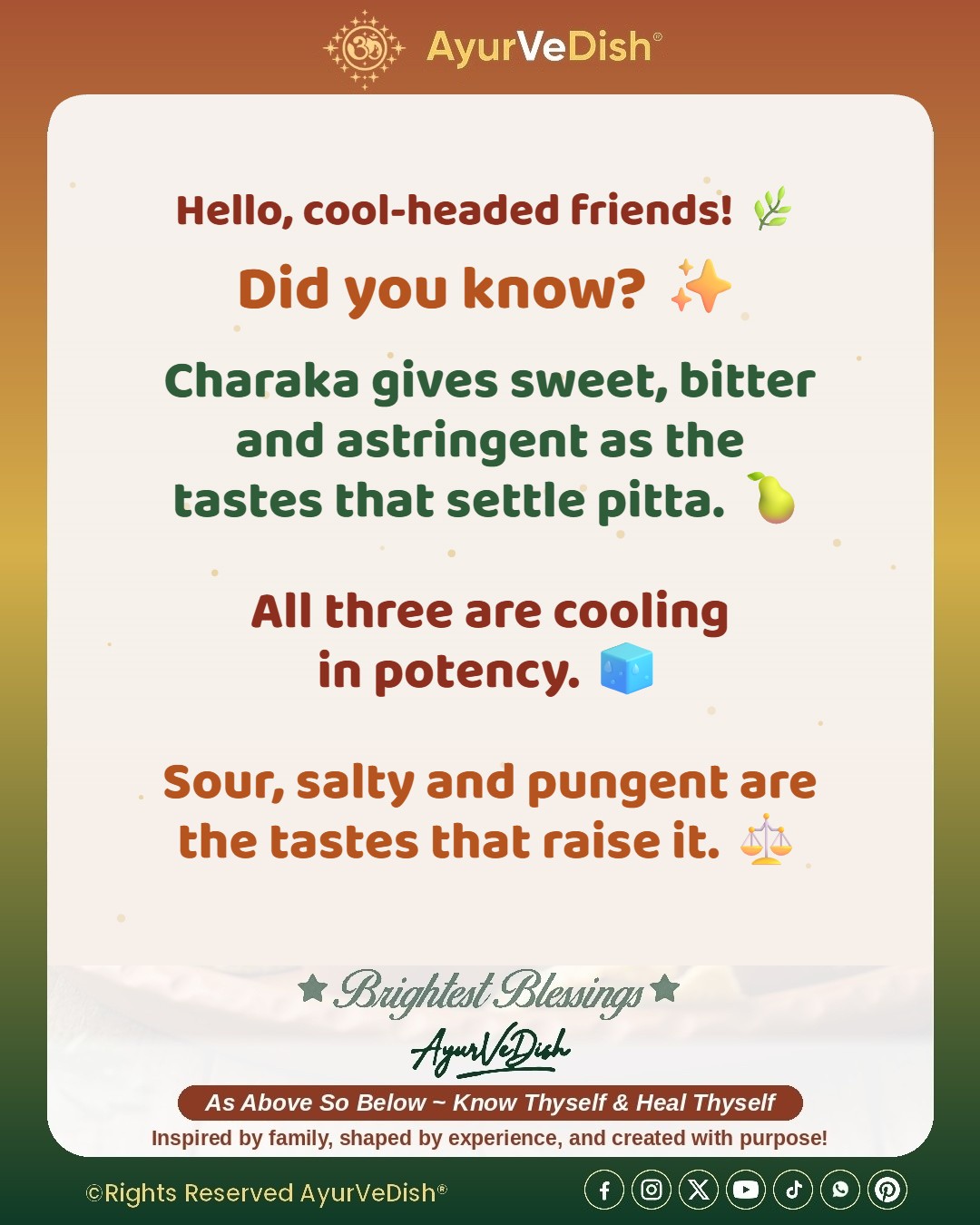
Charaka gives sweet, bitter and astringent as the tastes that settle pitta, and all three are cooling in potency. Sour, salty and pungent raise it, and the texts rank salt as the most heating taste of all, ahead of sour and then pungent, so a heavy hand with salt matters at least as much as chilli. Two sour fruits are named exceptions: the Ashtanga Hridaya says amalaka and pomegranate do not aggravate pitta, and Charaka adds that amalaka is not heating, just as he says rock salt is not. Bitter vegetables earn a special place, because Charaka groups aubergine, bitter gourd and pointed gourd as bitter, cooling and regulating for both pitta and kapha. Serve food warm or at room temperature rather than scalding or iced; favour moist, substantial textures such as gourds, dals and steamed greens over charred, crisp or sharply soured dishes; and eat on time, because the texts link pitta with a sharp digestive fire that, left without enough food, begins to wear on the body’s own tissues. Tomato, chilli, sweet potato and squash have no classical taste assignment, so where they appear here it is modern practice.
Cooking methods
- Steaming: greens, gourds, asparagus, and besan dhokla raised with bicarbonate of soda and lemon.
- Slow simmering in water, stock or coconut milk with coriander and fennel, at a gentle bubble rather than a fierce boil.
- Water-sauté: cook onions gently in splashes of stock until soft and sweet, stopping before they catch and char.
- Baking at a moderate oven heat, covered, rather than blistering under a hot grill.
- Dry-roasting kept to small amounts of cumin and coriander seed; skip the heavy chilli tadka and finish with fresh herbs off the heat.
- Resting a hot dish for a few minutes, so it is warm rather than scalding when it reaches the table.
A day of eating
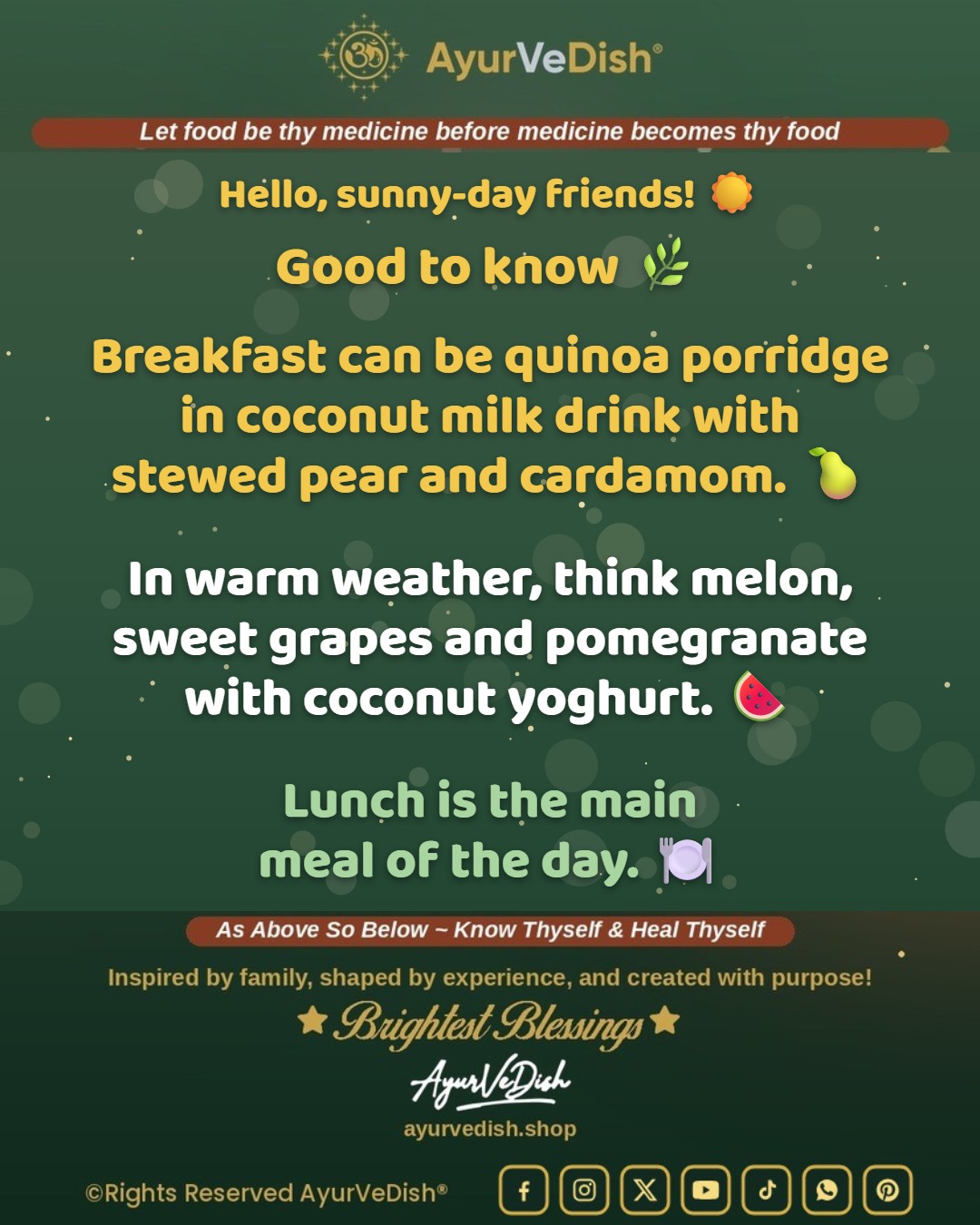
- Breakfast: quinoa porridge in coconut milk drink with stewed pear and cardamom; in warm weather, melon, sweet grapes and pomegranate with coconut yoghurt.
- Lunch, the main meal: Gujarati dudhi chana dal with cumin, coriander seed and plenty of fresh coriander, a cauliflower rice-type pilau, cucumber and mint raita made with coconut yoghurt, and a small fresh amla chutney.
- Dinner: moong dal soup with courgette and turmeric beside steamed asparagus and green beans, or a UK-style pea, courgette and mint soup with mushrooms and spinach cooked down in stock.
- Snack: a ripe pear or a handful of sweet grapes, soaked raisins, or a square of steamed besan dhokla with coriander and mint chutney.
- Drinks: coriander and fennel seed water through the morning, coconut water after exertion, and mint or rose tea in the afternoon, all cool rather than iced.
Through the UK year
Classically, pitta builds up in the rains, flares in the bright autumn that follows, when a body used to cool, wet weather meets sudden strong sun, and settles in early winter; for that autumn Charaka advises sweet, light, cool food with a little bitter, taken only with real appetite. A British summer is mild by comparison, so our adaptation is to watch the UK’s own heat: hot spells in July and August, and the warm, bright days that can run on into September, are the closest match. Through those weeks we lean on the settling column of the table, keep salt, sour and chilli light, and save the more heavily spiced cooking for when the evenings turn cold.
Build a list with our Ready-Made Lists on the Shopping List Builder.
What suits you will always depend on you as a person, your digestion, the season and how the food is prepared.
What Researchers Have Found
In a 2010 study in the journal PNAS, Indian researchers compared people of the three Ayurvedic constitution types and found that 251 genes were expressed differently between them. One of these, EGLN1, is known to help the body respond to low oxygen at high altitude. Two common variants of it differed between the types, with one more common in Pitta and another more common in Kapha. In other words, the old constitution types appear to line up with real biological differences, just as the ancients described.
Begin Where You Are
You do not need to decide whether you are Pitta. Simply notice. Do you feel better with fresh, cooling food? Do very hot, heavy meals leave you overheated? That noticing is the beginning of the practice.
Let Food Be Thy Medicine Before Medicine Becomes Thy Food.
As Above, So Below, Know Thyself and Heal Thyself.
Inspired by family, shaped by experience, and created with purpose!
Brightest Blessings

This page is for information only. For medical advice, please speak to a qualified professional.
Evidence and Sources
- Charaka Samhita, Sutrasthana 1, Deerghanjiviteeya Adhyaya, verse 60. carakasamhitaonline.com/index.php/Deerghanjiviteeya_Adhyaya
- Charaka Samhita, Sutrasthana 1, verse 66. siva.sh/caraka-samhita/sutra-sthana/1/66-70
- Ashtanga Hridaya, Sutrasthana 1, verse 11. satyori.com/source-texts/ashtanga-hridayam/sutrasthana/1/11/
- Sushruta Samhita, Sutrasthana 15. wisdomlib.org/hinduism/book/sushruta-samhita-volume-1-sutrasthana/d/doc122907.html
- Aggarwal S et al., PNAS 2010;107(44):18961-6, EGLN1 involvement in high-altitude adaptation revealed through genetic analysis of extreme constitution types defined in Ayurveda. pubmed.ncbi.nlm.nih.gov/20956315/
- Charaka Samhita, Sutrasthana 1 (Deerghanjiviteeya Adhyaya), verses 56 to 60: the three bodily doshas and the qualities of vata and pitta. siva.sh
- Charaka Samhita, Vimanasthana 1 (Rasa Vimana), verses 6 to 10: the tastes that increase and settle each dosha. siva.sh
- Charak Samhita Online (Charak Samhita Research, Training and Development Centre, Jamnagar). Charaka Samhita, Sutrasthana 26, Atreyabhadrakapyiya Adhyaya (verses 43, 49 and 53: actions of the tastes, rock salt and amalaka as non-heating, salt as the most heating taste). carakasamhitaonline.com
- ayurveda-origin. Ashtanga Hridaya, Sutrasthana 10, Rasabhediyam (mung among sweet foods that do not raise kapha; amalaka and pomegranate as sour fruits that do not aggravate pitta). ayurveda-origin.pages.dev
- Charaka Samhita, Sutrasthana 27 (Annapanavidhi Adhyaya), verses 21 to 25: mung, urad and black-eyed beans. siva.sh
- Charaka Samhita, Sutrasthana 27 (Annapanavidhi Adhyaya), verses 26 to 30: horse gram, moth beans, chickpeas, lentils, peas and sesame. siva.sh
- Charaka Samhita, Sutrasthana 27 (Annapanavidhi Adhyaya), verses 96 to 100: pointed gourd, aubergine, bitter gourd and other bitter vegetables. siva.sh
- Charaka Samhita, Sutrasthana 27 (Annapanavidhi Adhyaya), verses 121 to 125: mustard greens, mushrooms and grapes. siva.sh
- Charaka Samhita, Sutrasthana 27 (Annapanavidhi Adhyaya), verses 166 to 170: ginger, lemon, radish, holy basil and ajwain. siva.sh
- Charaka Samhita, Sutrasthana 6 (Tasyashiteeya Adhyaya), verses 41 to 45: autumn (sharad) regimen. siva.sh
- Ashtanga Hridaya, Sutrasthana 12 (Doshabhediya Adhyaya), verses 21 to 25: the seasonal build-up, flare and settling of each dosha. siva.sh
- Satyori. Ashtanga Hridayam, Sutrasthana 1, verse 8: the doshas across life, day, night and digestion, and the four digestive fires. satyori.com
- Charak Samhita Online. Charaka Samhita, Chikitsasthana 15, Grahani Chikitsa (verses 50 to 51: a sharp digestive fire given too little food). carakasamhitaonline.com