 AyurVeDish®
About us
Why AyurVeDish ExistsAyurveda at Our HeartOur Free-From PromiseWhole Food, Plant-Based LivingWhy Grain FreeWhy Oil FreeWhy Dairy FreeWhy Yeast FreeWhy Cane Sugar FreeWhy Soy FreeWhy Thoughtful IngredientsFresh and SeasonalHerbs and SpicesFood from Around the WorldGood Food for EveryoneA Recipe Should Inspire YouEat to LiveSalt, Spice and BalanceAyurveda
Ayurveda Made SimpleThe Five ElementsThe Three DoshasVataPittaKaphaPrakritiYour Dosha CombinationEating for Your ConstitutionChoosing Foods ThoughtfullyThe Six TastesSix Tastes on One PlateFood QualitiesAgni (Fire)Herbs and Spices in the Ayurvedic KitchenEating With the SeasonsAyurveda and the Body ClockFasting: The Ancient PauseBuilding a Plant-Based Ayurvedic MealAyurveda and Modern NutritionFood Combinations and Meal PlanningShop
Speciality All-in-One BlendsGrain Free Rice-Style BlendsSnack & Savoury PremixesGrain Free FloursBakes & DessertsChutneys, Dips & PicklesTadkas & Finishing SpicesDetox & Ayurvedic TeasHot & Cold Drinks





A Recipe Should Inspire You
A Guide, Not a Rulebook
Namaste, and welcome.
Cooking should leave room for your own imagination. A recipe can be a wonderful starting point: it can introduce us to unfamiliar ingredients, teach us a new technique or help us recreate a meal we have always loved. But a recipe should never make us feel that there is only one correct way to cook. Your preferences matter, your circumstances matter, and the ingredients available to you today may be different from those available to someone else.
Your Kitchen Is Not a Laboratory
There is a place for precision, particularly when developing a recipe. But everyday home cooking has a wonderfully human side. Perhaps you have a vegetable that needs using, a handful of fresh herbs left in the fridge, or an ingredient you would rather leave out. Perhaps you prefer a gentler flavour, or a little more warmth from your spices. These are not mistakes. They are part of learning to cook in a way that works for you.
What the Ancient Texts Say
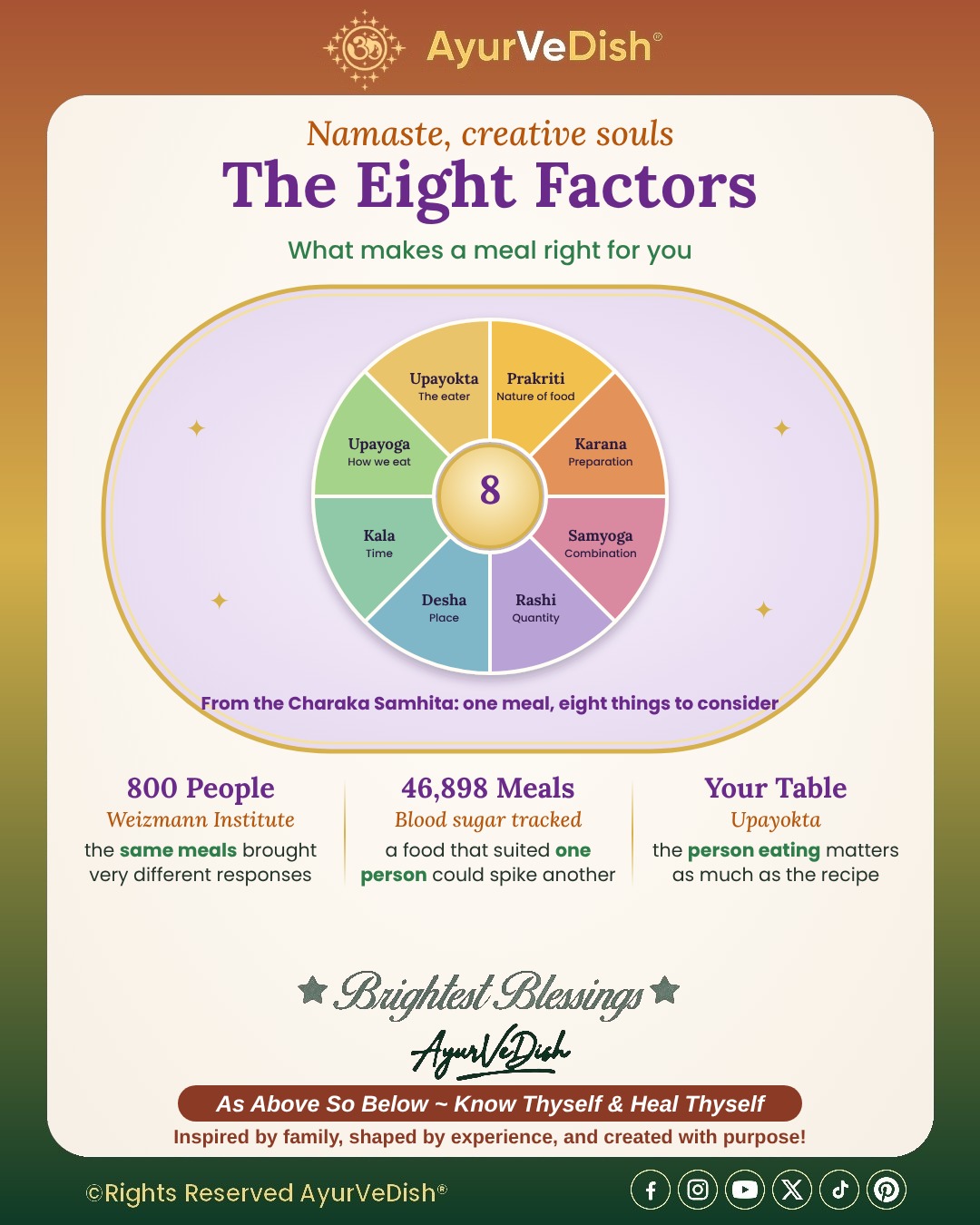
The Charaka Samhita recognised long ago that food is not one-size-fits-all. It names eight factors that decide whether a meal suits us: the nature of the food (prakriti), how it is prepared (karana), how foods are combined (samyoga), how much we eat (rashi), the place (desha), the time (kala), the rules for eating (upayoga samstha) and, last but not least, the person eating (upayokta) (Vimana Sthana 1.21).
Our ancestors understood that the same dish can be right for one person and wrong for another, and that the cook must take the eater into account. We believe it is one of the oldest arguments there is for cooking to suit your own table.
Learn the Principles Behind the Process
One of the most useful things we can learn is not a particular recipe but the reason a recipe works. Why does a small amount of a strongly flavoured spice change an entire dish? Why does the order in which we add ingredients matter? When we understand the principles, we are less dependent on exact instructions, and when something does not turn out as expected, we learn what to do differently next time.
What Researchers Have Found
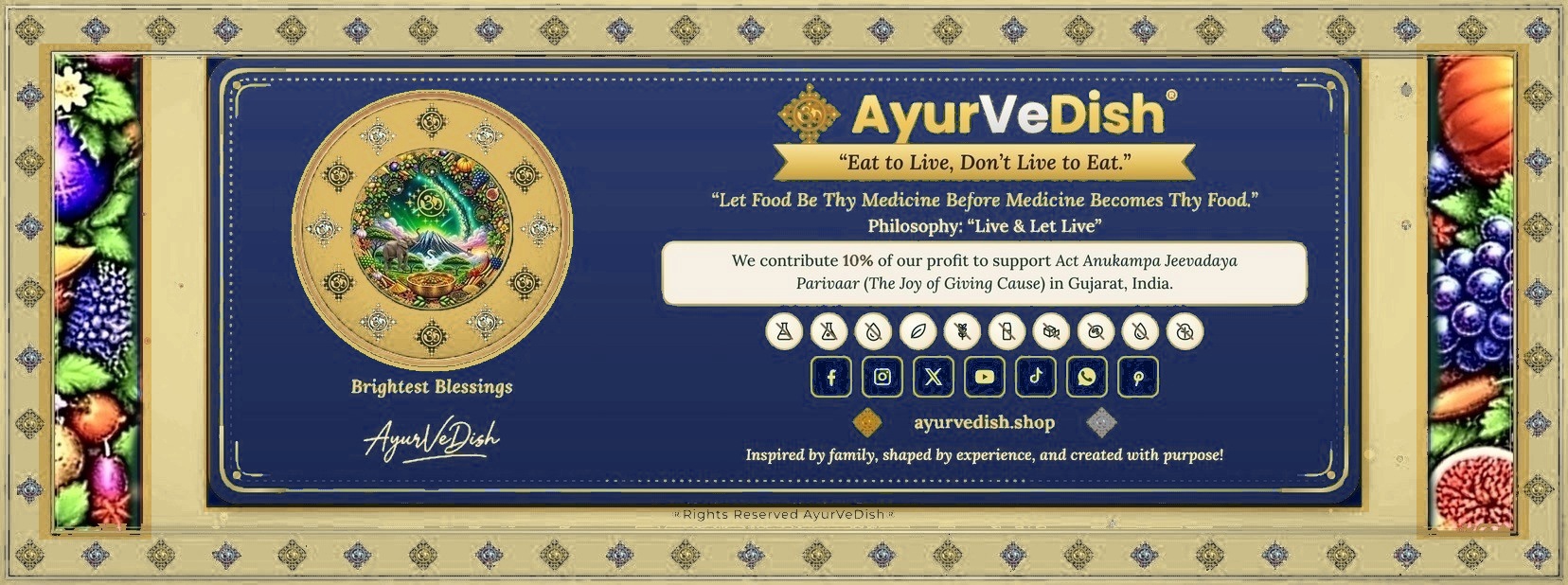
The same meal, different bodies. In 2015, Professor Eran Segal and Professor Eran Elinav of the Weizmann Institute of Science in Israel measured the blood sugar of 800 people after 46,898 real-life meals. People eating identical meals responded very differently, and a food that suited one person’s blood sugar could spike another’s. In a follow-up trial of 26 people, a diet tailored to each person kept post-meal blood sugar steadier.
Every Body Is Different
Even twins differ. In 2020, the PREDICT 1 study by Dr Sarah Berry and Professor Tim Spector of King’s College London gave 1,002 people in the UK, many of them twins, identical test meals. Their blood fat, sugar and insulin responses varied widely from one person to the next.
These studies look at individual differences, not advice for any one person, but they show why one rigid rule rarely fits everyone.
There Is No Shame in Making Cooking Easier
Modern life leaves little time for elaborate preparation. That is why our curry and dal blends are complete, all-in-one blends: the balance of herbs and spices is already in the pouch, so there is no guesswork. You then make it your own, choosing your vegetables, pulses or beans and the heat level that suits your table. One 100g pouch makes about 25 portions at Mild (4g), 14 at Medium (7g) or 10 at Extra Hot (10g), each for 200g of vegetables.
Let Curiosity Lead the Way
Use a recipe as written when that suits you. Adapt it when you understand how. Ask questions, trust your growing knowledge, and do not let the fear of getting something wrong stop you from beginning. The real achievement is not reproducing a dish exactly as someone else made it. It is developing the knowledge and confidence to create food that works for your own table.
Be guided by knowledge. Cook with confidence. Leave room for imagination.
Let Food Be Thy Medicine Before Medicine Becomes Thy Food.
As Above, So Below, Know Thyself and Heal Thyself.
Inspired by family, shaped by experience, and created with purpose!
Brightest Blessings

This page is for information only. For medical advice, please speak to a qualified professional.
Evidence and Sources
- Charaka Samhita, Vimana Sthana 1.21, Rasa Vimana (the eight factors of diet). carakasamhitaonline.com/index.php/Rasa_Vimana
- Zeevi D, Korem T, Zmora N et al. Personalized nutrition by prediction of glycemic responses. Cell 2015;163(5):1079-1094. doi.org/10.1016/j.cell.2015.11.001
- NutraIngredients. What’s better for blood glucose levels, sushi or ice cream? It depends who you are, say researchers. 27 November 2015. nutraingredients.com/Article/2015/11/27/what-s-better-for-blood-glucose-levels-sushi-or-ice-cream-it-depends-who-you-are-say-researchers
- Berry SE, Valdes AM, Drew DA et al. Human postprandial responses to food and potential for precision nutrition. Nature Medicine 2020;26(6):964-973. doi.org/10.1038/s41591-020-0934-0