 AyurVeDish®
About us
Why AyurVeDish ExistsAyurveda at Our HeartOur Free-From PromiseWhole Food, Plant-Based LivingWhy Grain FreeWhy Oil FreeWhy Dairy FreeWhy Yeast FreeWhy Cane Sugar FreeWhy Soy FreeWhy Thoughtful IngredientsFresh and SeasonalHerbs and SpicesFood from Around the WorldGood Food for EveryoneA Recipe Should Inspire YouEat to LiveSalt, Spice and BalanceAyurveda
Ayurveda Made SimpleThe Five ElementsThe Three DoshasVataPittaKaphaPrakritiYour Dosha CombinationEating for Your ConstitutionChoosing Foods ThoughtfullyThe Six TastesSix Tastes on One PlateFood QualitiesAgni (Fire)Herbs and Spices in the Ayurvedic KitchenEating With the SeasonsAyurveda and the Body ClockFasting: The Ancient PauseBuilding a Plant-Based Ayurvedic MealAyurveda and Modern NutritionFood Combinations and Meal PlanningShop
Speciality All-in-One BlendsGrain Free Rice-Style BlendsSnack & Savoury PremixesGrain Free FloursBakes & DessertsChutneys, Dips & PicklesTadkas & Finishing SpicesDetox & Ayurvedic TeasHot & Cold Drinks




Fasting: The Ancient Pause
Fasting, the Ancient Pause From Food
Look closely at the old traditions of India and the Far East and you find the same quiet habit again and again: a pause from food. It was rarely called health advice. It came wrapped in devotion, discipline and sacrifice. How clever our ancients were!
More than two thousand years ago, with no laboratories and no microscopes, they noticed something that matters to our health, and they handed it down. They gave us the practice and trusted us to keep it, long before anyone could explain why it works.
What the Ancient Texts Say
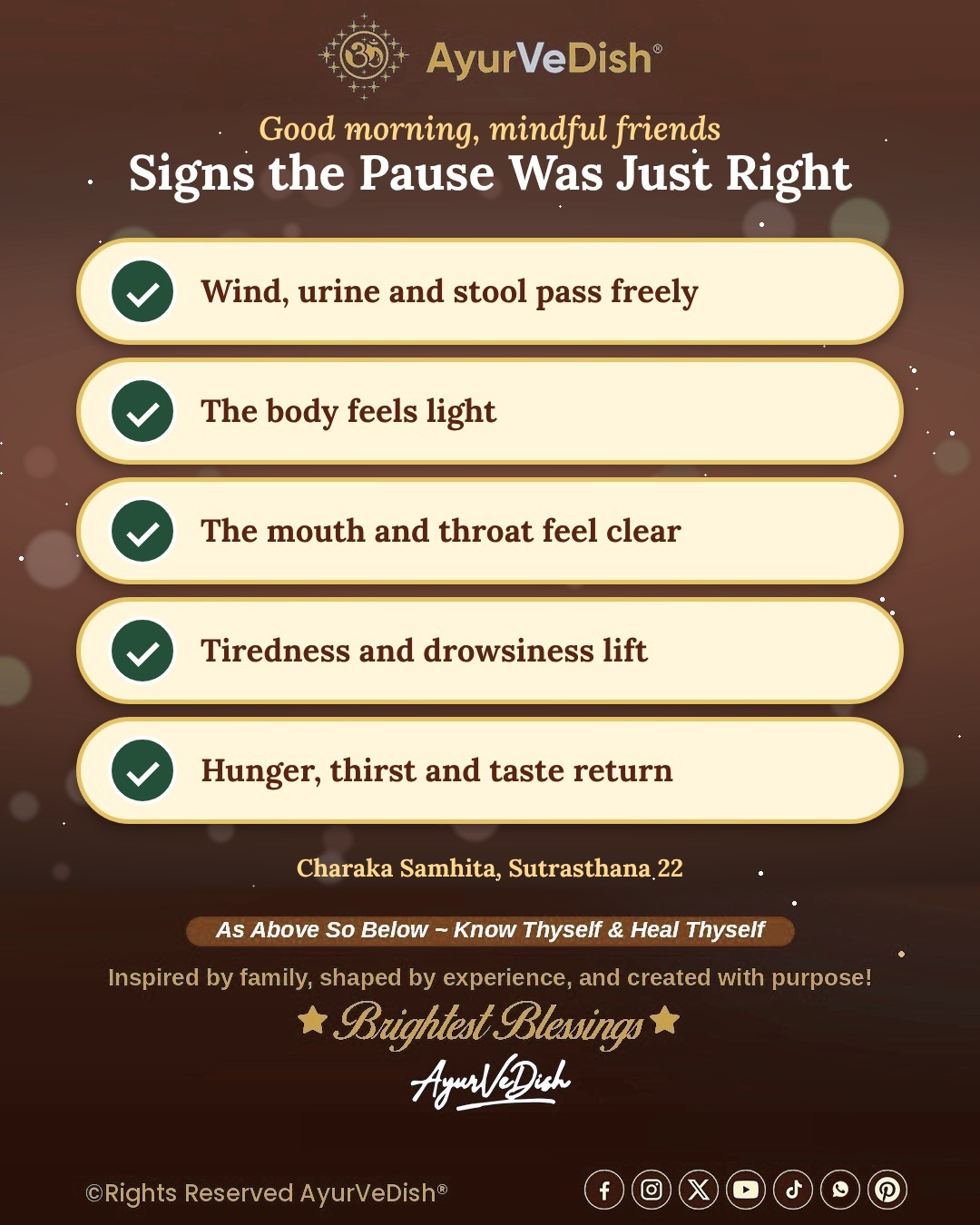
The Charaka Samhita (Sutrasthana 22, verse 18) lists fasting, called upavasa, among the ten langhana, the “lightening” therapies. For mild upsets, the same chapter says fasting and limiting thirst are enough. It also gives the signs that the pause has been just right: wind, urine and stool pass freely, the body feels light, the mouth and throat feel clear, tiredness and drowsiness lift, and hunger, thirst and taste return.
It warns of too much as well, with joint pain, dry mouth, loss of appetite and fainting. Chikitsasthana 3.139 advises against lightening where vata is high or in states of fear, anger, grief and exertion. Fasting here is a measured practice, never a test of endurance.
The same thread runs through the East. In the Bhaddali Sutta (Majjhima Nikaya 65), the Buddha says he takes a single meal a day. He describes few ailments and afflictions, and a pleasant way of living, and he invites the monks to try it.

The Nobel Prize for Autophagy
Every cell in your body is a tiny household. It builds, it uses, and it also clears out. The clearing out has a name, autophagy, from the Greek for “self-eating”. Scientists first saw it in the 1960s, but they could not study it, so for decades it stayed a mystery.
Then Yoshinori Ohsumi found a way. He worked with yeast, whose cells have a recycling compartment called the vacuole. He used yeast lacking the enzymes that normally break things down in the vacuole, and then he starved them. Within hours, the vacuoles filled with small bubbles of cell parts waiting to be recycled. Autophagy was real, and he could now see it. He went on to identify 15 genes that are essential for it, and in 2016 he was awarded the Nobel Prize in Physiology or Medicine for his discoveries of mechanisms for autophagy.
The Nobel Assembly described what this recycling does. It provides fuel for energy and building blocks for renewal of cell parts. It can clear out invading bacteria and viruses. It contributes to embryo development. And it removes damaged proteins and worn-out cell parts, a quality control mechanism critical for counteracting the negative consequences of ageing. Our ancients taught the pause thousands of years before the word autophagy existed, and today’s laboratories are still uncovering what they already knew.
What Researchers Have Found About Fasting
In 2019, Rafael de Cabo and Mark Mattson reviewed the research on intermittent fasting in the New England Journal of Medicine. Here is what they report.
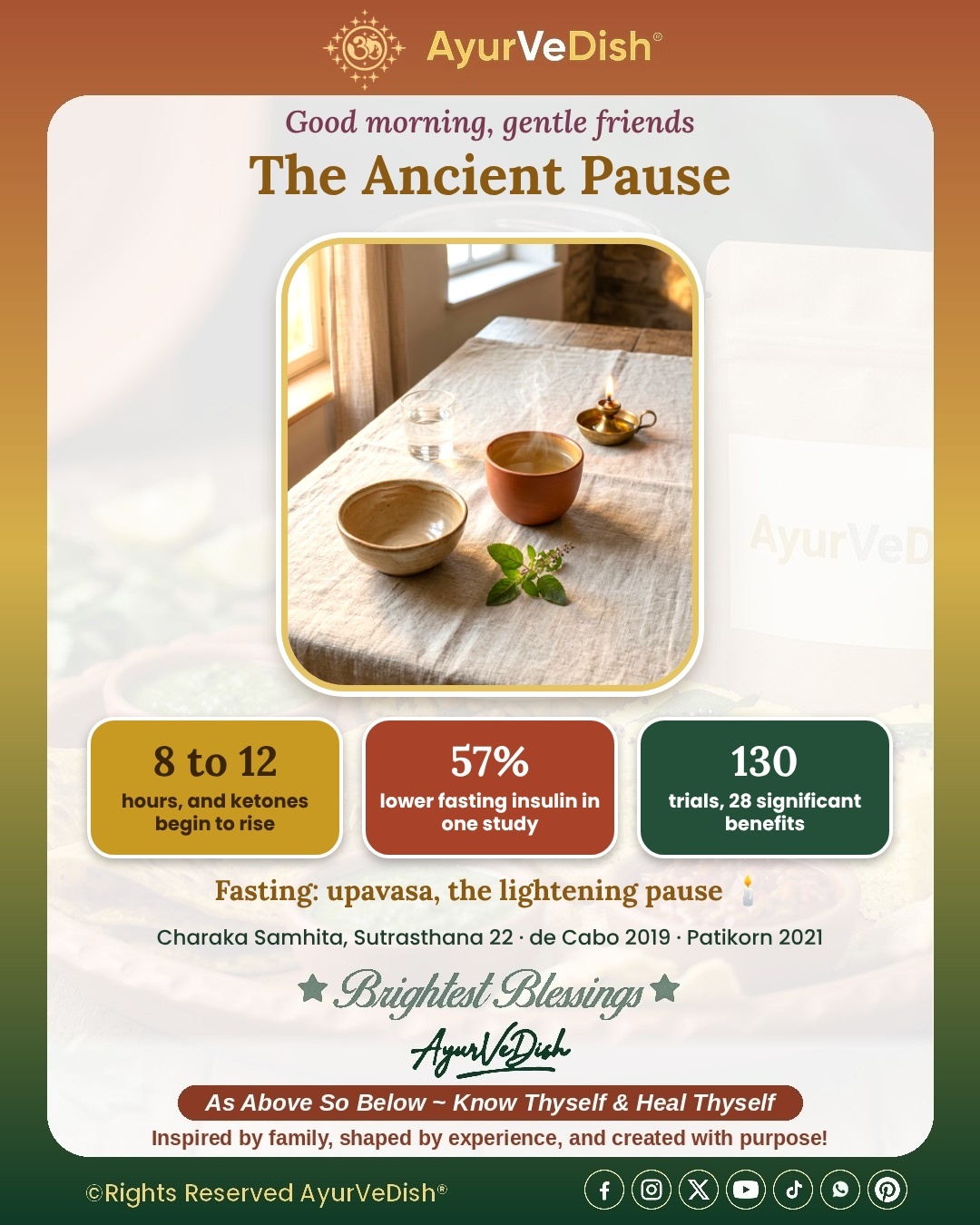
Ketones, the body’s fat-based fuel, begin to rise within 8 to 12 hours of fasting and reach as high as 2 to 5 millimoles per litre by 24 hours.
In one study, 16 healthy participants fasted on alternate days for 22 days, and their fasting insulin fell by 57%.
Improvements in heart health markers typically appear within 2 to 4 weeks of starting alternate-day fasting.
In 2021, Chanthawat Patikorn and colleagues pooled the evidence in JAMA Network Open. Their umbrella review gathered 11 meta-analyses covering 130 randomised trials, and it found 28 significant benefits, in body weight, body mass index and fat mass, in LDL and total cholesterol and triglycerides, in fasting glucose, fasting insulin and insulin resistance, and in blood pressure.
Modified alternate-day fasting for one to two months gave a moderate fall in body mass index, backed by high-quality evidence. Researchers are still working out how fasting switches autophagy on in people.
Bringing the Pause Home
You do not need a dramatic fast to enjoy the idea. A longer gap overnight, an earlier supper or a lighter evening is a gentle way to begin. When you do eat, keep it warm and simple. Our Detox Kitchadi Blend, made with mung, cooks in one pot with vegetables and water, and our Vata, Pitta and Kapha balance herbal teas (plant-based) make a gentle companion.
Fasting is not for everyone. Please speak to a qualified professional before you try it.
Let Food Be Thy Medicine Before Medicine Becomes Thy Food.
As Above, So Below, Know Thyself and Heal Thyself.
Inspired by family, shaped by experience, and created with purpose!
Brightest Blessings

This page is for information only. For medical advice, please speak to a qualified professional.
Evidence and Sources
- Charaka Samhita, Sutrasthana 22, verse 18 (Langhanabrimhaniya Adhyaya, Planet Ayurveda): planetayurveda.com/library/charak-samhita-sutrasthana-chapter-22-langhanabrimhaniya-adhyaya/
- Langhana, with Chikitsasthana 3.139 (Caraka Samhita Online): carakasamhitaonline.com/index.php/Langhana
- Bhaddali Sutta, Majjhima Nikaya 65 (BuddhaSasana): budsas.org/ebud/majjhima/065-bhaddali-e1.htm
- The 2016 Nobel Prize in Physiology or Medicine, press release (NobelPrize.org): nobelprize.org/prizes/medicine/2016/press-release/
- de Cabo R, Mattson MP. Effects of intermittent fasting on health, aging, and disease. N Engl J Med 2019;381:2541-2551: pubmed.ncbi.nlm.nih.gov/31881139/
- Patikorn C et al. Intermittent fasting and obesity-related health outcomes: an umbrella review of meta-analyses of randomized clinical trials. JAMA Netw Open 2021;4(12):e2139558: pubmed.ncbi.nlm.nih.gov/34919135/