 AyurVeDish®
About us
Why AyurVeDish ExistsAyurveda at Our HeartOur Free-From PromiseWhole Food, Plant-Based LivingWhy Grain FreeWhy Oil FreeWhy Dairy FreeWhy Yeast FreeWhy Cane Sugar FreeWhy Soy FreeWhy Thoughtful IngredientsFresh and SeasonalHerbs and SpicesFood from Around the WorldGood Food for EveryoneA Recipe Should Inspire YouEat to LiveSalt, Spice and BalanceAyurveda
Ayurveda Made SimpleThe Five ElementsThe Three DoshasVataPittaKaphaPrakritiYour Dosha CombinationEating for Your ConstitutionChoosing Foods ThoughtfullyThe Six TastesSix Tastes on One PlateFood QualitiesAgni (Fire)Herbs and Spices in the Ayurvedic KitchenEating With the SeasonsAyurveda and the Body ClockFasting: The Ancient PauseBuilding a Plant-Based Ayurvedic MealAyurveda and Modern NutritionFood Combinations and Meal PlanningShop
Speciality All-in-One BlendsGrain Free Rice-Style BlendsSnack & Savoury PremixesGrain Free FloursBakes & DessertsChutneys, Dips & PicklesTadkas & Finishing SpicesDetox & Ayurvedic TeasHot & Cold Drinks





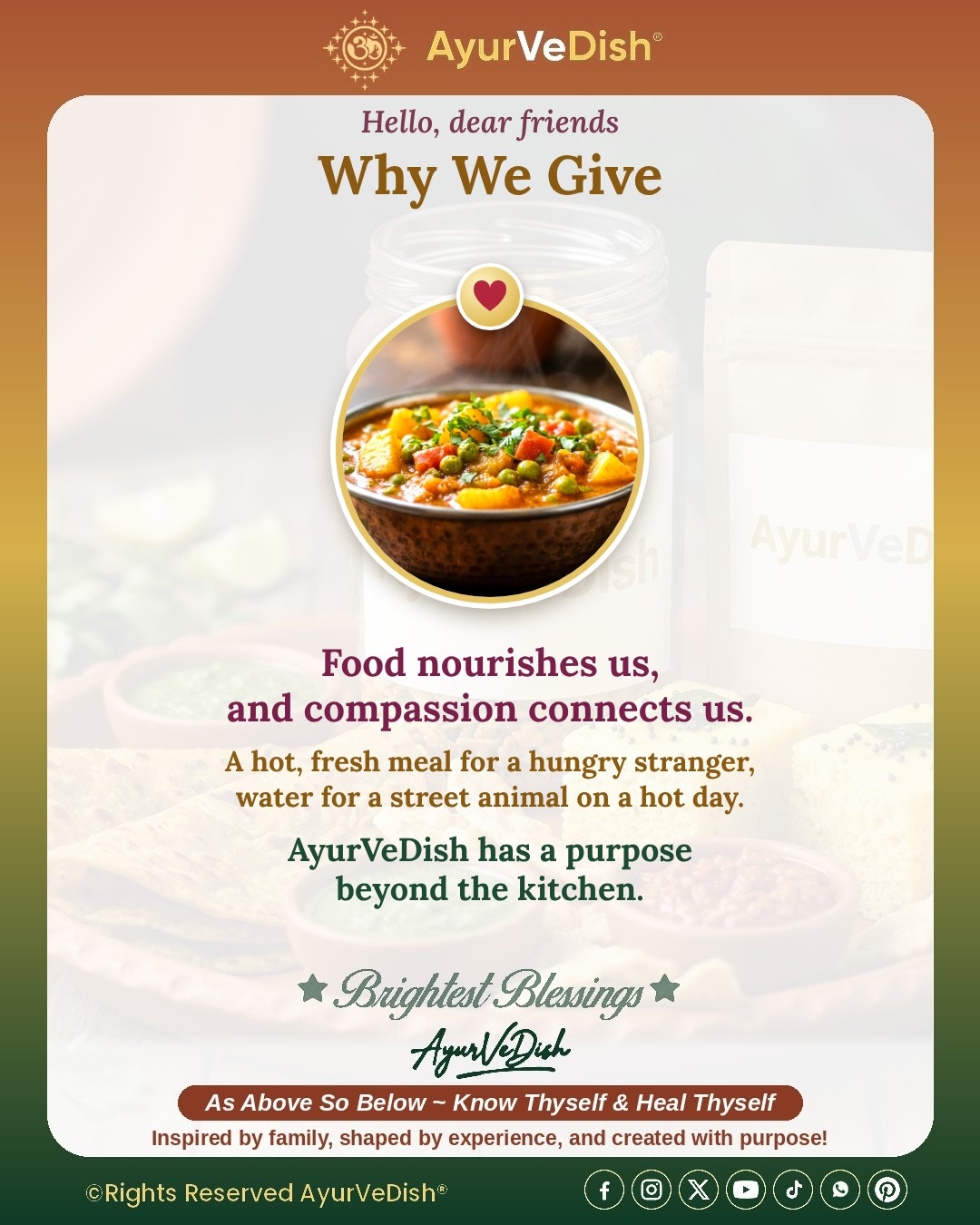
Food Nourishes and Compassion Connects
Some of my happiest moments have nothing to do with cooking. A hungry stranger is handed a hot, fresh meal. A street animal is given water on a hot afternoon. In my view, this is what food was always meant to do. It nourishes us, and it gives us a way to reach one another.
AyurVeDish was created with a purpose beyond the kitchen.
Our Family Legacy
Giving has never been something we do on our own. In our family we learn it from one another and pass it on. I grew up with the example of people who shared what they had, and I carry their values with me. I wanted my business to share that same spirit.
A Son Who Takes on the Mountain
My son regularly takes on demanding physical challenges to raise money for causes he supports, including charities helping children affected by cancer and leukaemia. He has completed the journey to Machu Picchu, the UK Three Peaks Challenge, and an Everest-related challenge in Nepal. He has run a half marathon in Leicester. He also completed a 70-mile ultra marathon in the UK, starting in Cumbria, after a whole year of training. Now he is planning a climb of Mount Kilimanjaro in Tanzania.
These challenges take preparation, determination and perseverance. What makes them meaningful is the purpose behind them: using personal effort to raise awareness and funds for people facing difficult circumstances.

What Researchers Have Found
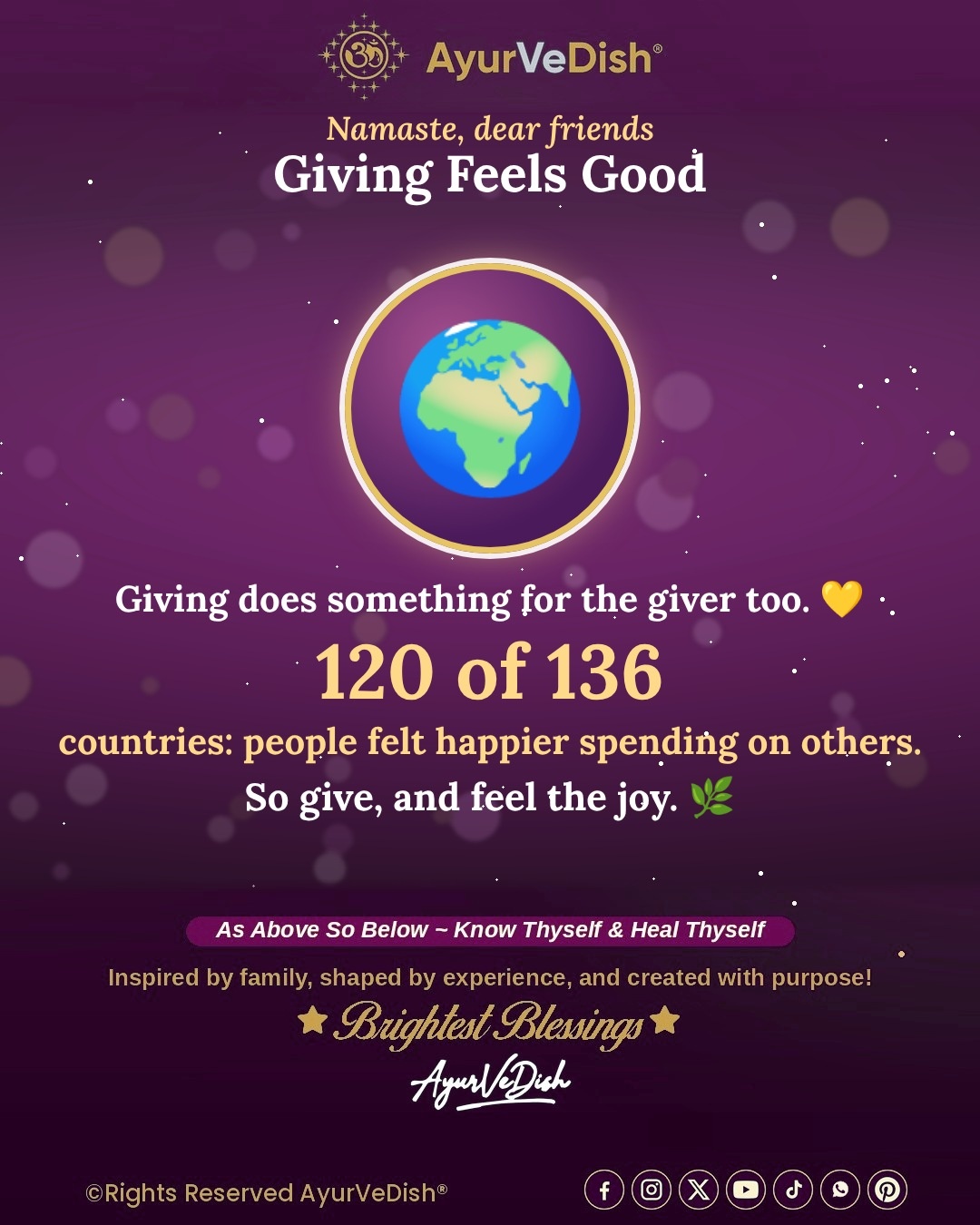
In a large 2013 study in the Journal of Personality and Social Psychology, Lara Aknin and colleagues looked at data from 234,917 people in 136 countries. In 120 of them, people who spent money on others reported greater well-being than those who spent only on themselves. This held in every world region and after taking income into account. In experiments, students felt better after buying a gift bag for a sick child than for themselves.
In a 2007 study in Science, University of Oregon researchers scanned the brains of 19 women, each given $100, as they saw gifts to a local food bank. Giving by choice lit up the brain’s pleasure centres more than giving because it was required. It fits the old teaching to give freely and joyfully.
Does generosity pass down the generations? A 2008 study in the Journal of Public Economics by Mark Wilhelm and colleagues used long-running US family data. It found that parents’ and adult children’s giving to religious causes was linked as strongly as their income and wealth. Giving to other causes was also linked, though less strongly. The authors concluded that generosity is learned, at least in part, from parents.
All of this is observational, so it shows links, not proof of cause.
What the Ancient Texts Say
In the Brihadaranyaka Upanishad (5.2.1 to 3), the voice of thunder says one syllable, “da”. Each listener hears something different: damyata, “be self-controlled”, datta, “give”, and dayadhvam, “be kind”. The Bhagavad Gita (17.20) describes the finest giving as that offered as a duty, expecting nothing back, to a deserving person, at the right time and place.
The Gita (3.21) adds that whatever great people do, common people follow, and whatever standards they set, the world pursues. A family’s way of living is a quiet teacher, and children learn generosity by watching it. The ancients did not lecture. They wrapped generosity in verse, ritual and example, and trusted us to hear it.
Different Ways of Giving
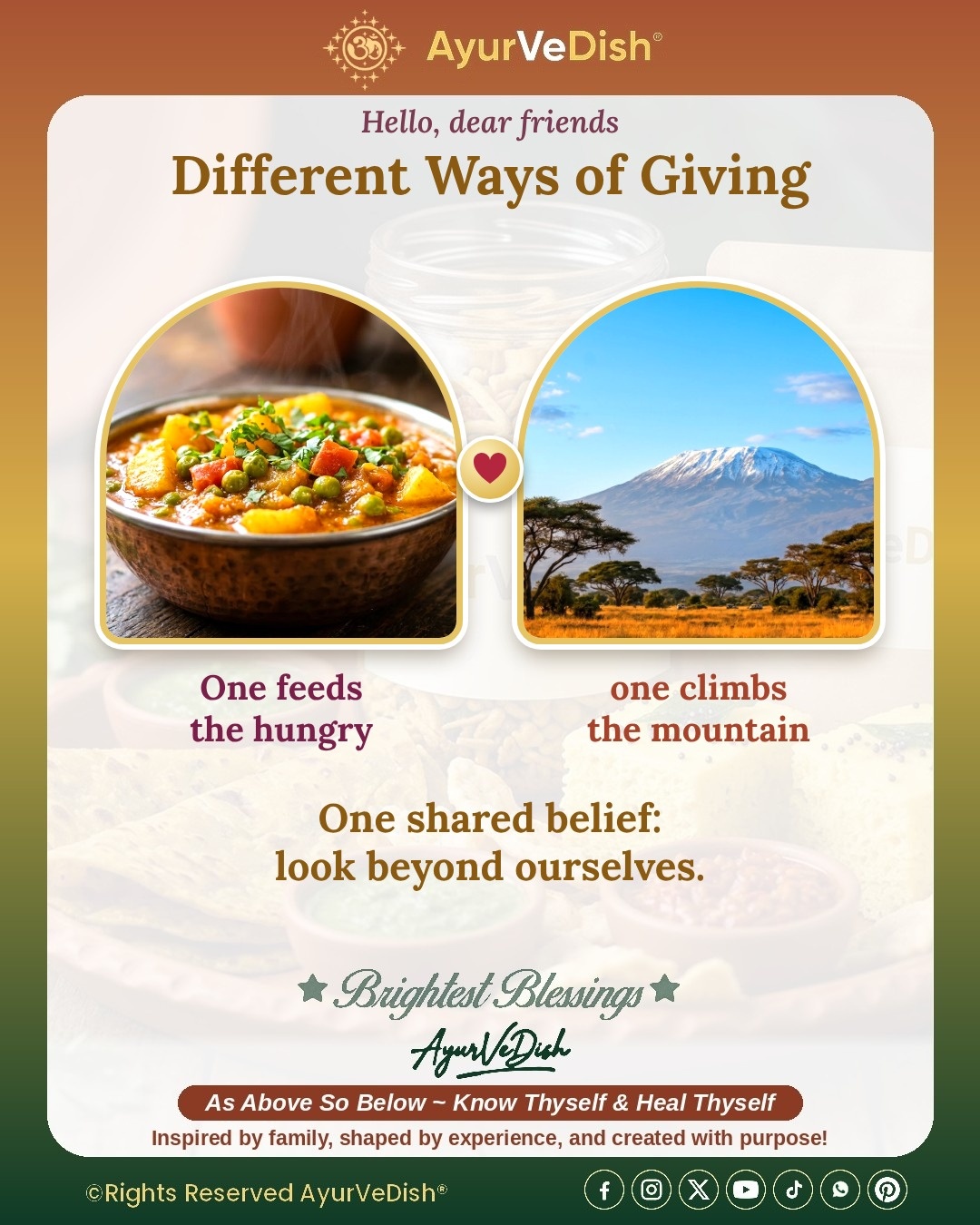
I am proud that giving has a place in our family in different ways. For me, it means feeding vulnerable people and animals wherever I travel, and building AyurVeDish around a promise of 10% of its profits. For my son, it means pushing himself physically for causes that matter to him.
Our efforts take different forms, but we share one belief: we should look beyond ourselves and do what we can for others.
Food can nourish us, but compassion can bring us together.
As Above, So Below, Know Thyself and Heal Thyself.
Inspired by family, shaped by experience, and created with purpose!
Brightest Blessings

This page is for information only. For medical advice, please speak to a qualified professional.
Evidence and Sources
- Brihadaranyaka Upanishad, Fifth Chapter, Second Section (the three principal virtues)
- Bhagavad Gita, Chapter 17, Verse 20, translation and comment
- Bhagavad Gita, Chapter 3, Verse 21, translation and comment
- Aknin LB et al. (2013) Prosocial spending and well-being: cross-cultural evidence for a psychological universal, American Psychological Association
- University of Oregon (2007) Charitable giving activates the brain’s reward centres, Science study, ScienceDaily
- Wilhelm MO et al. (2008) The intergenerational transmission of generosity, Journal of Public Economics 92(10-11), RePEc