 AyurVeDish®
About us
Why AyurVeDish ExistsAyurveda at Our HeartOur Free-From PromiseWhole Food, Plant-Based LivingWhy Grain FreeWhy Oil FreeWhy Dairy FreeWhy Yeast FreeWhy Cane Sugar FreeWhy Soy FreeWhy Thoughtful IngredientsFresh and SeasonalHerbs and SpicesFood from Around the WorldGood Food for EveryoneA Recipe Should Inspire YouEat to LiveSalt, Spice and BalanceAyurveda
Ayurveda Made SimpleThe Five ElementsThe Three DoshasVataPittaKaphaPrakritiYour Dosha CombinationEating for Your ConstitutionChoosing Foods ThoughtfullyThe Six TastesSix Tastes on One PlateFood QualitiesAgni (Fire)Herbs and Spices in the Ayurvedic KitchenEating With the SeasonsAyurveda and the Body ClockFasting: The Ancient PauseBuilding a Plant-Based Ayurvedic MealAyurveda and Modern NutritionFood Combinations and Meal PlanningShop
Speciality All-in-One BlendsGrain Free Rice-Style BlendsSnack & Savoury PremixesGrain Free FloursBakes & DessertsChutneys, Dips & PicklesTadkas & Finishing SpicesDetox & Ayurvedic TeasHot & Cold Drinks





Ayurveda and Modern Nutrition
Two Ways of Looking at Food
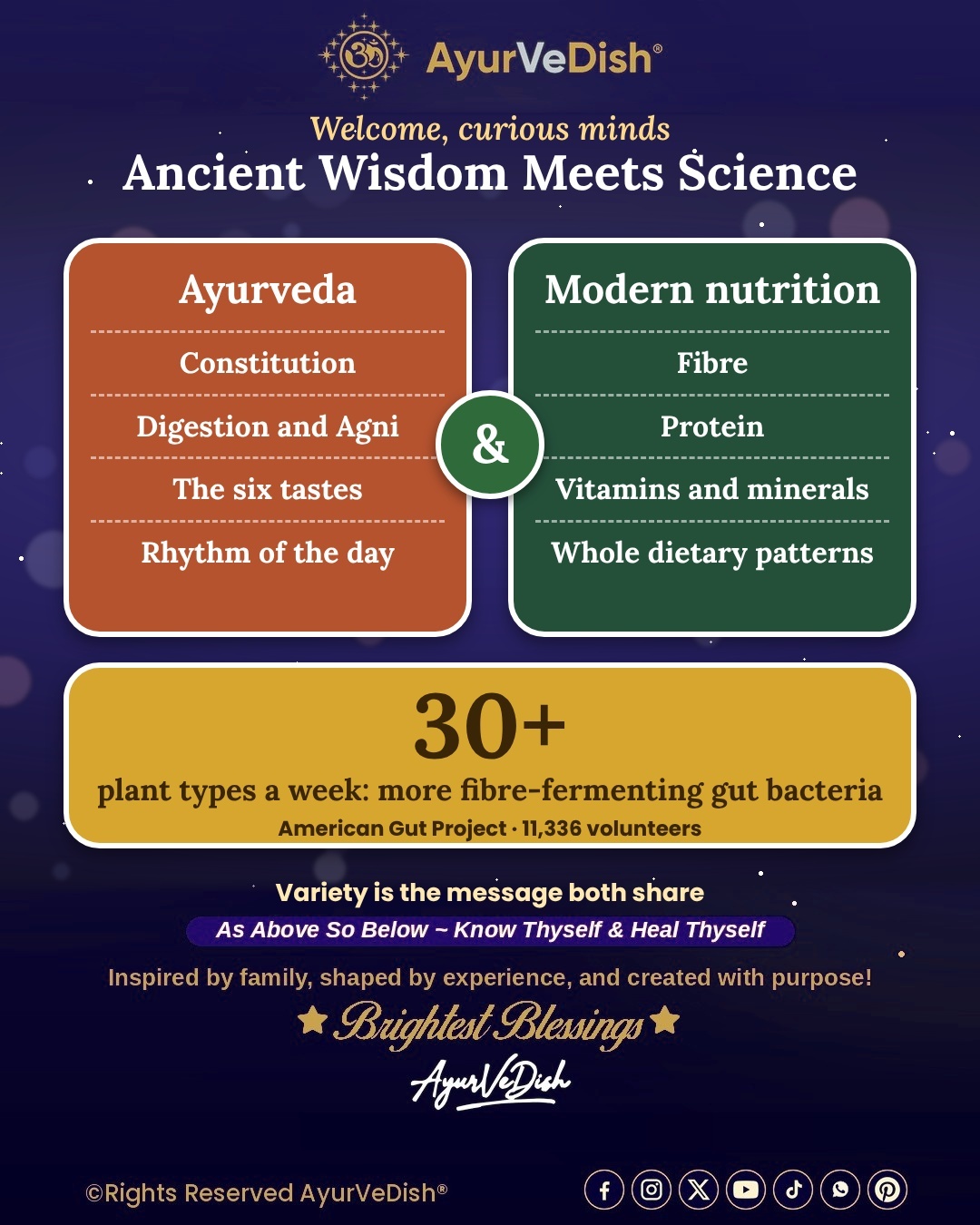
Ayurveda looks at food through constitution, digestion, taste and the rhythm of the day. Modern nutrition looks at it through fibre, protein, vitamins, minerals and whole dietary patterns. They speak different languages, yet they often point in the same direction. That is the most beautiful part.
The ancients had no laboratories, but they noticed, watched and wrote down what they saw, and today’s researchers are starting to measure it.
What the Ancient Texts Say
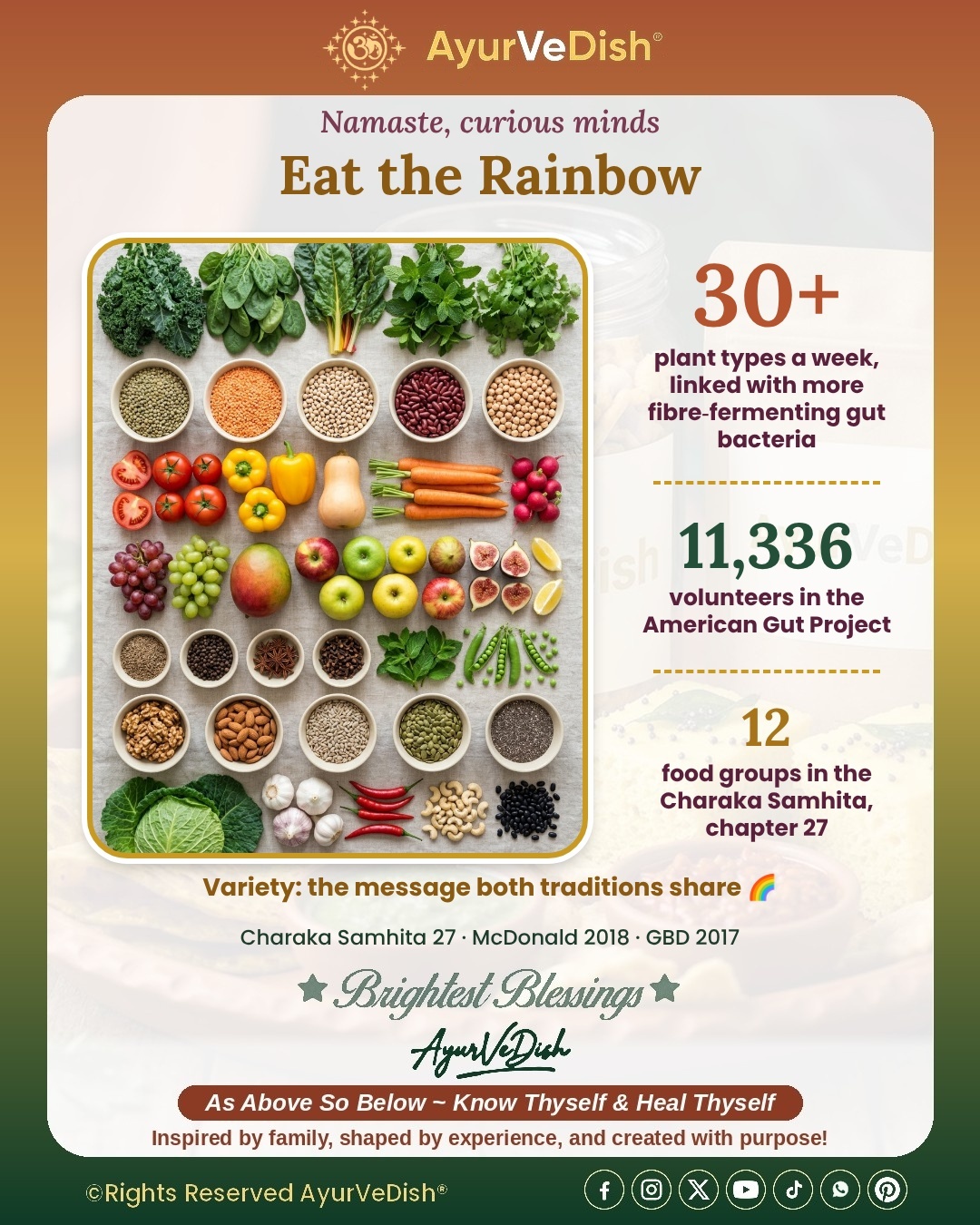
The Charaka Samhita does not describe a single “healthy diet”. Its twenty-seventh chapter of Sutrasthana sorts food into twelve groups, including pulses, vegetables, fruits and greens, and describes the qualities of each. The ancient message is variety, with attention to how each food suits the person eating it.

Where Tradition and Science Meet
Both traditions value variety, and both value plant foods. Ayurveda speaks of Vata, Pitta, Kapha, Agni and the six tastes. Science speaks of measurable things such as fibre, nutrients and gut bacteria. Enjoy each in its own language.
The Value of Plant-Based Foods
Vegetables, beans, lentils, chickpeas, peas, fruits and herbs all provide fibre and a wide range of naturally occurring plant compounds. A plant-based meal is at its best when it is varied and well balanced, with good sources of the nutrients your body needs.
Where Classical Ideas and Modern Evidence Meet
It is tempting to say that science proves Ayurveda. It does not, and Ayurveda does not need that claim. The two systems ask different questions with different tools. Where they point the same way, that is worth knowing; where they part, that is worth knowing too.
Pulses
Charaka names mung the best of all pulses and describes chickpeas and lentils as light. Modern research has looked at pulses as a group. A 2014 meta-analysis of 26 randomised trials with 1,037 people found that diets including about one serving of pulses a day (a median of 130g) lowered LDL cholesterol by 0.17 mmol/L on average compared with similar diets without them. The authors asked for longer, better-quality trials, and found no clear effect on two other blood fat markers.
Fibre
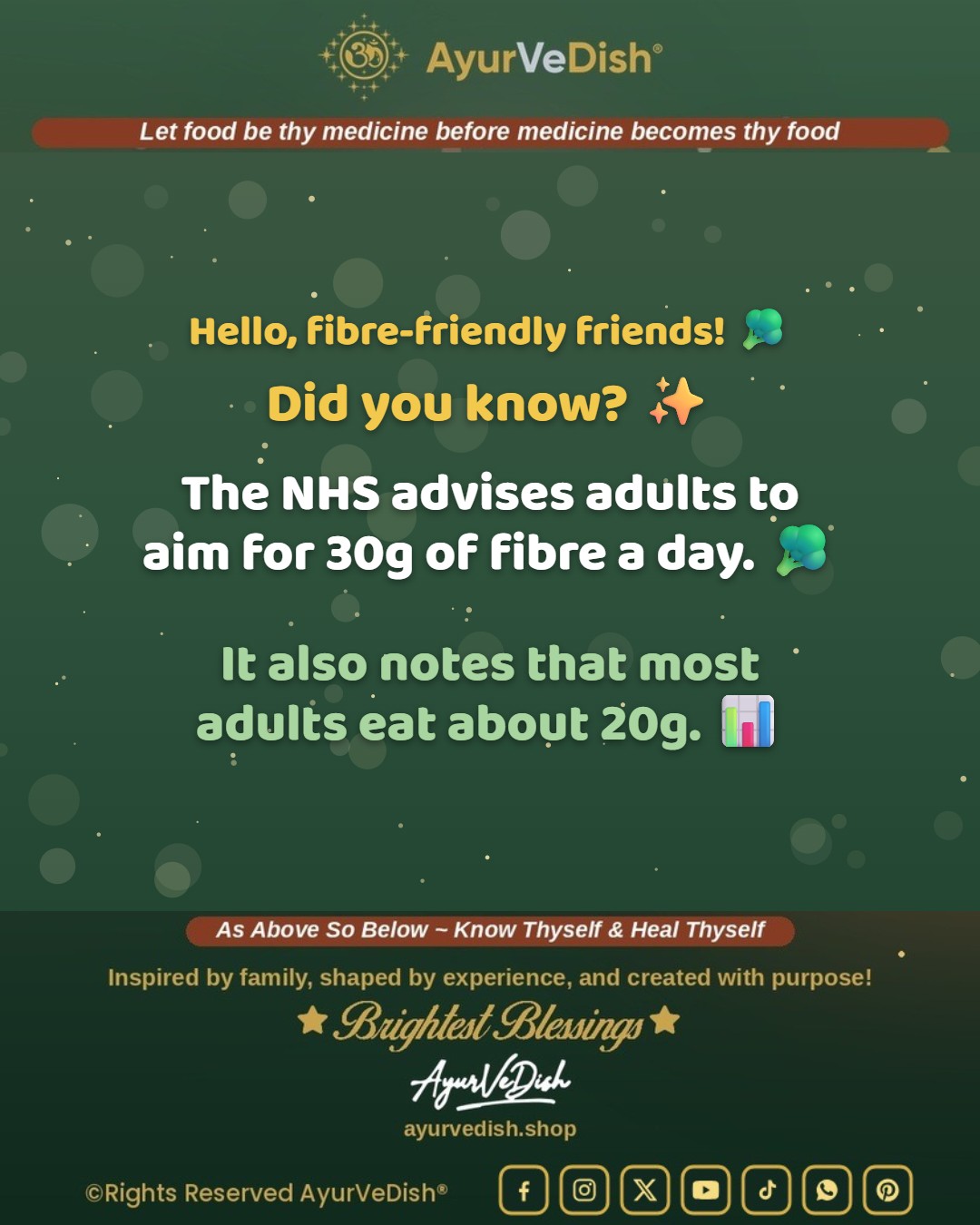
The NHS advises adults to aim for 30g of fibre a day and notes that most adults eat about 20g. A series of reviews commissioned by the World Health Organization and published in 2019 found that people eating the most fibre had roughly 15 to 30% lower rates of death from all causes and from heart disease, and of stroke, type 2 diabetes and bowel cancer, than those eating the least, with the largest differences at about 25 to 29g a day. These are mostly observational findings, which show association, not proof of cause. A plate of pulses, vegetables, a green and a grain free base such as quinoa or buckwheat is naturally high in fibre.
Meal timing
Charaka advises eating only after the previous meal has been digested, in measured quantity. Modern studies on timing are suggestive but small:
- A 1987 study of 16 healthy men found solid food left the stomach more slowly at 8pm than at 8am; liquids did not show the same delay.
- A 2018 trial with 8 men completing it found that eating within a six-hour window ending mid-afternoon improved insulin sensitivity and blood pressure over five weeks.
Larger trials temper this. A 2020 trial of 116 adults found that eating only between noon and 8pm showed no clear advantage over eating through the day, and a 2022 trial of 139 adults found that adding an 8am to 4pm eating window made no significant extra difference over a year. The fair summary is that an earlier, lighter evening meal may suit metabolism, but a time window is not a proven tool on its own.
Where They Differ
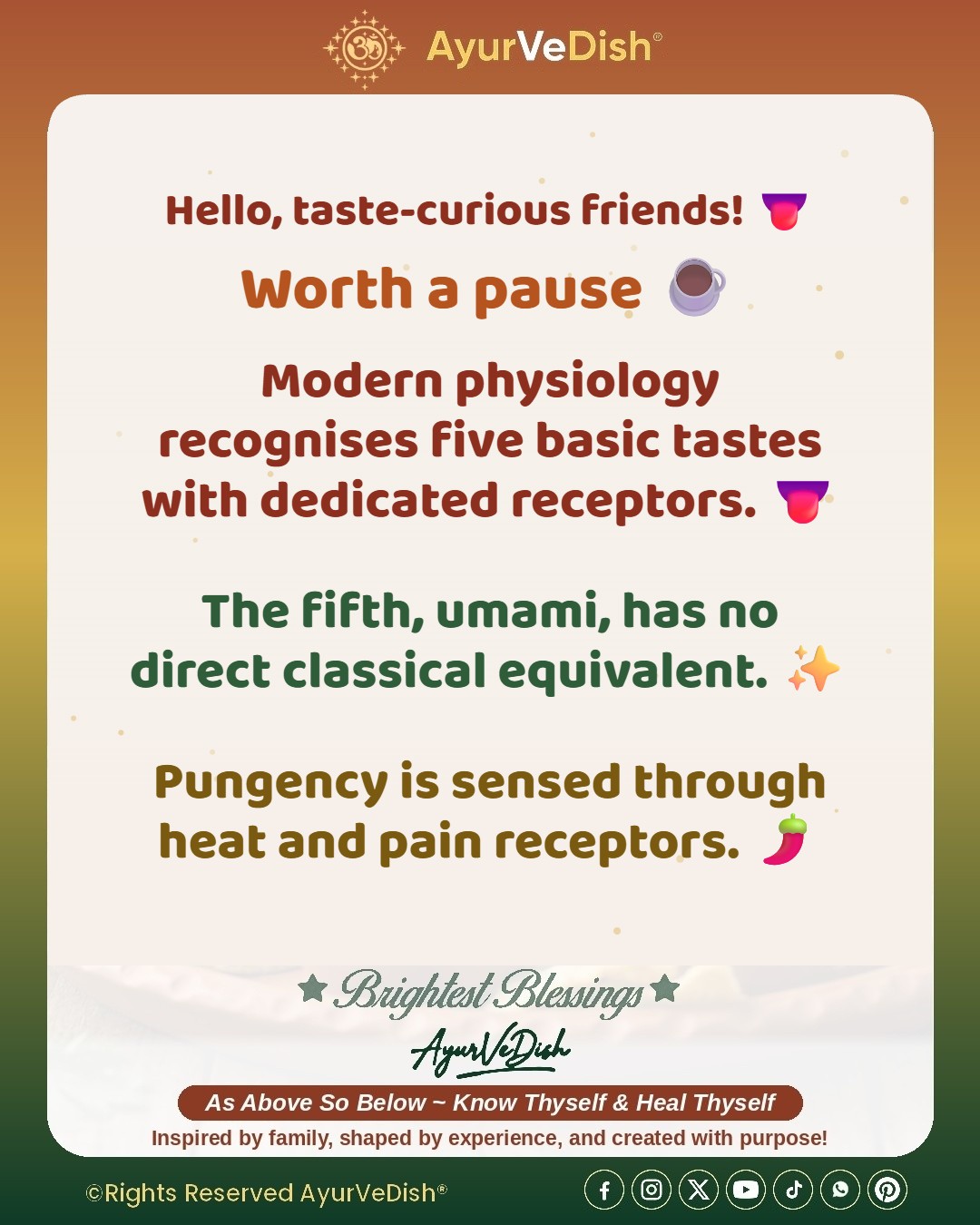
- Taste: modern physiology recognises five basic tastes with dedicated receptors, including umami, which has no direct classical equivalent. Pungency is sensed through heat and pain receptors, and astringency is generally regarded as a feeling of touch in the mouth. The six tastes of Ayurveda describe effects in the mouth and the body; they are not a claim about receptors.
- Nutrients: the classics speak of qualities, potency and digestion, not protein, vitamins or minerals. Modern nutrition is needed for questions such as vitamin B12 or iodine on a plant-based diet; speak to your GP or a registered dietitian about these.
- Constitution: we have not found trials testing dosha-based diets that we could verify, so we present constitution as a traditional framework, not a proven one.
Honest Limits
Most nutrition studies measure averages across groups, while Ayurveda is concerned with the individual in front of it. Neither replaces the other, and neither replaces medical care. If you have a health condition or take medication, talk to your doctor before changing how you eat.
What suits you will always depend on you as a person, your digestion, the season and how the food is prepared.
What Researchers Have Found
The American Gut Project is one of the world’s largest citizen-science studies of the gut microbiome, the community of bacteria that lives in our digestive system. By May 2017 it had received samples from 11,336 volunteers. When Daniel McDonald, Rob Knight and colleagues reported on it in mSystems in 2018, they compared people eating more than 30 types of plants a week with those eating 10 or fewer. The 30-plus group showed:
More of the gut bacteria that ferment plant fibre, such as Faecalibacterium prausnitzii.
Lower levels of some antibiotic-resistance genes.
Higher levels of conjugated linoleic acid, a fatty acid made by gut bacteria.
Counting herbs, spices, vegetables, pulses and fruits, 30 is easier to reach than it sounds. This is a snapshot of eating habits, so it shows a link, and it is a lovely modern echo of the ancient advice to eat a variety of foods.
Modern nutrition also looks at whole populations. In 2017, the Global Burden of Disease study counted 11 million deaths worldwide linked to what people eat. A high-salt diet, too few whole grains and too little fruit were the leading dietary risks. The finding appeared in The Lancet in 2019. Seen this way, the old advice to choose good food with care carries real weight today.
Our Approach at AyurVeDish
We bring together our love of Ayurvedic tradition and our passion for convenient, flavourful plant-based cooking. Our blends are complete, all-in-one mixes: add vegetables, pulses or beans and water, then cook. One 100g pouch of a curry or dal blend makes about 25 portions at Mild (4g), 14 at Medium (7g) or 10 at Extra Hot (10g), each for 200g of vegetables.
Variety is built into the range:
Our grain free Blueberry Muffin Premix and grain free Instant Gujarati Srikand Dessert Premix are made without cane sugar, egg or dairy.
Our grain free Self Raising Flour is used weight for weight in your own recipes.
Our Plant-Based Kimchi Blend brings fermented-style tang to the table.
Saunf, Pudina & Gulab Sharbat is a cooling drink for warm days.
And that is only the start.
Respect tradition, value scientific evidence and enjoy food that nourishes both your table and your sense of flavour.
Let Food Be Thy Medicine Before Medicine Becomes Thy Food.
As Above, So Below, Know Thyself and Heal Thyself.
Inspired by family, shaped by experience, and created with purpose!
Brightest Blessings

This page is for information only. For medical advice, please speak to a qualified professional.
Evidence and Sources
- Charaka Samhita, Sutrasthana 27 (Annapanavidhi Adhyaya, Planet Ayurveda): planetayurveda.com/library/charak-samhita-sutrasthana-chapter-27-annapanavidhi-adhyaya/
- McDonald D et al. American Gut: an open platform for citizen science microbiome research. mSystems 2018;3(3):e00031-18: pubmed.ncbi.nlm.nih.gov/29795809/
- GBD 2017 Diet Collaborators. Health effects of dietary risks in 195 countries, 1990-2017: a systematic analysis for the Global Burden of Disease Study 2017. Lancet 2019;393:1958-1972: pubmed.ncbi.nlm.nih.gov/30954305/
- Charak Samhita Research, Training and Skill Development Centre. Charaka Samhita, Sutrasthana 25, Yajjah Purushiya Adhyaya (mung as the best pulse). Charak Samhita Online, 2020. carakasamhitaonline.com
- Charak Samhita Research, Training and Skill Development Centre. Charaka Samhita, Vimanasthana 1, Rasa Vimana (rules of eating). Charak Samhita Online, 2020. carakasamhitaonline.com
- Ha V, et al. Effect of dietary pulse intake on established therapeutic lipid targets for cardiovascular risk reduction: a systematic review and meta-analysis of randomized controlled trials. CMAJ 2014;186(8):E252-62. pubmed.ncbi.nlm.nih.gov
- Reynolds A, Mann J, Cummings J, Winter N, Mete E, Te Morenga L. Carbohydrate quality and human health: a series of systematic reviews and meta-analyses. Lancet 2019;393(10170):434-445. discovery.dundee.ac.uk
- NHS. How to get more fibre into your diet. Reviewed 2026. nhs.uk
- Circadian variation in gastric emptying of meals in humans. Gastroenterology 1987;93(3):515-8 (commonly cited as Goo RH et al.). pubmed.ncbi.nlm.nih.gov
- Sutton EF, et al. Early time-restricted feeding trial in men with prediabetes. Cell Metabolism 2018;27(6):1212-1221. pmc.ncbi.nlm.nih.gov
- TREAT randomised clinical trial of time-restricted eating (noon to 8pm window). JAMA Internal Medicine 2020. pubmed.ncbi.nlm.nih.gov
- Liu D, et al. Twelve-month trial of time-restricted eating (8am to 4pm window). New England Journal of Medicine 2022;386(16):1495-1504. pubmed.ncbi.nlm.nih.gov
- Chandrashekar J, et al. The receptors and cells for mammalian taste. Nature 2006;444(7117):288-94. pubmed.ncbi.nlm.nih.gov
- Caterina MJ, et al. The capsaicin receptor: a heat-activated ion channel in the pain pathway. Nature 1997;389(6653):816-24. juliuslab.ucsf.edu