 AyurVeDish®
About us
Why AyurVeDish ExistsAyurveda at Our HeartOur Free-From PromiseWhole Food, Plant-Based LivingWhy Grain FreeWhy Oil FreeWhy Dairy FreeWhy Yeast FreeWhy Cane Sugar FreeWhy Soy FreeWhy Thoughtful IngredientsFresh and SeasonalHerbs and SpicesFood from Around the WorldGood Food for EveryoneA Recipe Should Inspire YouEat to LiveSalt, Spice and BalanceAyurveda
Ayurveda Made SimpleThe Five ElementsThe Three DoshasVataPittaKaphaPrakritiYour Dosha CombinationEating for Your ConstitutionChoosing Foods ThoughtfullyThe Six TastesSix Tastes on One PlateFood QualitiesAgni (Fire)Herbs and Spices in the Ayurvedic KitchenEating With the SeasonsAyurveda and the Body ClockFasting: The Ancient PauseBuilding a Plant-Based Ayurvedic MealAyurveda and Modern NutritionFood Combinations and Meal PlanningShop
Speciality All-in-One BlendsGrain Free Rice-Style BlendsSnack & Savoury PremixesGrain Free FloursBakes & DessertsChutneys, Dips & PicklesTadkas & Finishing SpicesDetox & Ayurvedic TeasHot & Cold Drinks





Six Tastes on One Plate
Six Tastes on One Plate: Flavour Without the Maths
Most of us do not cook by counting tastes. We cook by smelling, tasting and adding a little of this or that until the pot feels right. The good news is that the six tastes fit that way of cooking perfectly. You do not need to measure or calculate anything. You only need to notice what is already on your plate.
This is where Ayurveda becomes joyful. The ancient idea of balance turns into something very simple: a plate that looks, smells and tastes alive.
Build Flavour From Everyday Ingredients
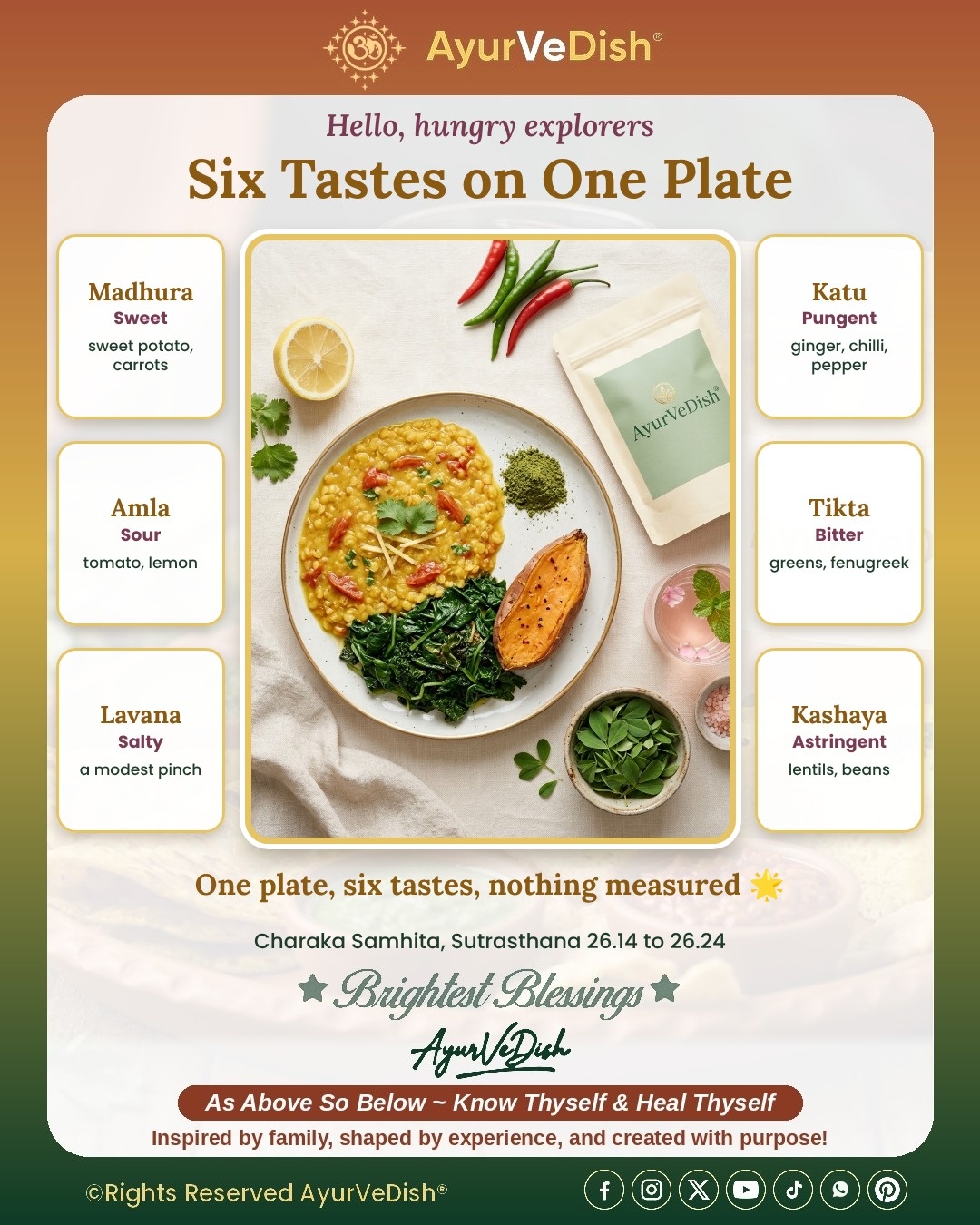
You do not need special ingredients or complicated recipes. Many familiar plant foods bring the tastes together naturally.
Sweet. Sweet potato, pumpkin, carrots or ripe fruit.
Sour. Lemon juice, lime or tomato.
Salty. A modest amount of salt to bring the flavours together.
Pungent. Ginger, black pepper, chilli or mustard.
Bitter. Bitter greens or fenugreek leaves.
Astringent. Lentils, chickpeas, beans or certain green vegetables.
An Example on One Plate
Imagine a comforting lentil dish with tomato, ginger, cumin and coriander, served with leafy greens and baked sweet potato.
The lentils provide substance and astringency, the tomato adds sourness, the ginger brings pungency, the greens can contribute bitterness, and the sweet potato offers natural sweetness. Seasoning adds saltiness. One meal, several tastes, nothing measured.
Our dal blends make this effortless: one 100g pouch makes about 25 portions at Mild (4g), 14 at Medium (7g) or 10 at Extra Hot (10g), per 200g of vegetables. A spoonful of our grain and oil free Hari chutney premix finishes the plate, and our Saunf Pudina & Gulab Sharbat makes a fresh drink to go with it.
What the Ancient Texts Say
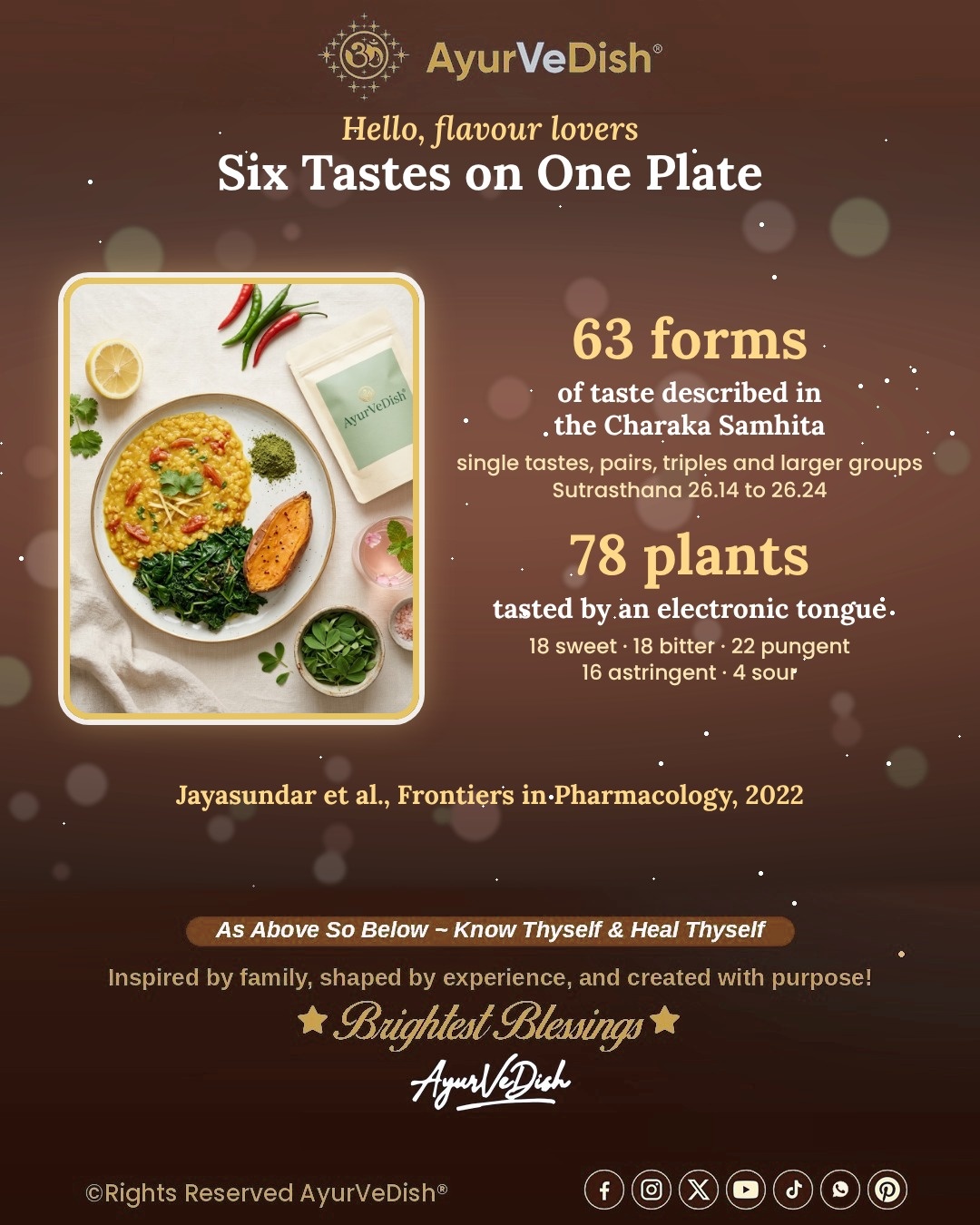
The Charaka Samhita does not treat the six tastes as a short list. It describes how they combine: single tastes, then pairs, triples and larger groups, adding up to 63 forms in all (Sutrasthana 26.14 to 26.24). Flavour is a nearly endless range of blends, which is why a pot of simple ingredients can taste so different from one cook to the next.
What Researchers Have Found
Researchers have begun to ask whether the traditional taste groups can be measured. In 2022, Jayasundar and colleagues in India (Frontiers in Pharmacology) used an electronic tongue, a sensor that “tastes” samples, on 78 medicinal plants grouped by traditional taste: 18 sweet, 18 bitter, 22 pungent, 16 astringent and 4 sour.
The device could tell sweet plants from sour, bitter and pungent ones, and sour from pungent.
The sweet group closely matched sucrose, the reference sweet standard.
It correctly placed a plant of known sweet group with the sweet plants.
It is an early sign that the old taste classes may reflect real differences. The authors describe it as a preliminary study.
Start With What You Love
Begin with ingredients you love, experiment with flavour and see how a few thoughtful combinations can transform a simple meal.
The six tastes are part of traditional Ayurvedic food theory. This example is for culinary inspiration, not a personalised dietary prescription.
Let Food Be Thy Medicine Before Medicine Becomes Thy Food.
As Above, So Below, Know Thyself and Heal Thyself.
Inspired by family, shaped by experience, and created with purpose!
Brightest Blessings

This page is for information only. For medical advice, please speak to a qualified professional.
Evidence and Sources
- Charaka Samhita, Sutrasthana 26, verses 14 to 24 (Atreyabhadrakapyiya Adhyaya): carakasamhitaonline.com/index.php/Atreyabhadrakapyiya_Adhyaya
- Jayasundar R et al., Chemosensory-based ayurvedic classification of medicinal plants can be fingerprinted using E-tongue. Front Pharmacol 2022;13:1025591: pmc.ncbi.nlm.nih.gov/articles/PMC9755338/