 AyurVeDish®
About us
Why AyurVeDish ExistsAyurveda at Our HeartOur Free-From PromiseWhole Food, Plant-Based LivingWhy Grain FreeWhy Oil FreeWhy Dairy FreeWhy Yeast FreeWhy Cane Sugar FreeWhy Soy FreeWhy Thoughtful IngredientsFresh and SeasonalHerbs and SpicesFood from Around the WorldGood Food for EveryoneA Recipe Should Inspire YouEat to LiveSalt, Spice and BalanceAyurveda
Ayurveda Made SimpleThe Five ElementsThe Three DoshasVataPittaKaphaPrakritiYour Dosha CombinationEating for Your ConstitutionChoosing Foods ThoughtfullyThe Six TastesSix Tastes on One PlateFood QualitiesAgni (Fire)Herbs and Spices in the Ayurvedic KitchenEating With the SeasonsAyurveda and the Body ClockFasting: The Ancient PauseBuilding a Plant-Based Ayurvedic MealAyurveda and Modern NutritionFood Combinations and Meal PlanningShop
Speciality All-in-One BlendsGrain Free Rice-Style BlendsSnack & Savoury PremixesGrain Free FloursBakes & DessertsChutneys, Dips & PicklesTadkas & Finishing SpicesDetox & Ayurvedic TeasHot & Cold Drinks




Why Grain Free
Why We Believe Grain-Free Deserves a Place at Your Table
Namaste, and welcome.
Have we mistaken what became convenient to grow for what we must eat to thrive?
Before the Plough
For most of human history, people lived by gathering foods from the natural world. Our ancestors ate a varied diet shaped by where they lived, the seasons and whatever the land offered.
Farming changed the way humanity eats, but in the long story of human life it is quite recent. Dr Ainit Snir and colleagues studied Ohalo II, a 23,000-year-old camp on the shore of the Sea of Galilee in Israel. They found that people there gathered over 140 plant species and ground wild wheat and barley, while the development of agriculture is generally dated to around 12,000 years ago in the Fertile Crescent.
Grain farming has been part of our lives for only a tiny fraction of our time on earth. It makes us wonder: what did our ancestors know that we have forgotten?
What the Ancient Texts Say
Our ancestors wrapped their wisdom in festivals, fasts, stories and sacred days, and handed it down from one generation to the next. These traditions are messages from the past about how to stay fit, healthy and happy. That is why we read them as guidance, not as dogma. Over the centuries, religious texts have too often been used to divide people, when their deeper purpose was to look after them.
Agyaras: An Ancient Message About Grain
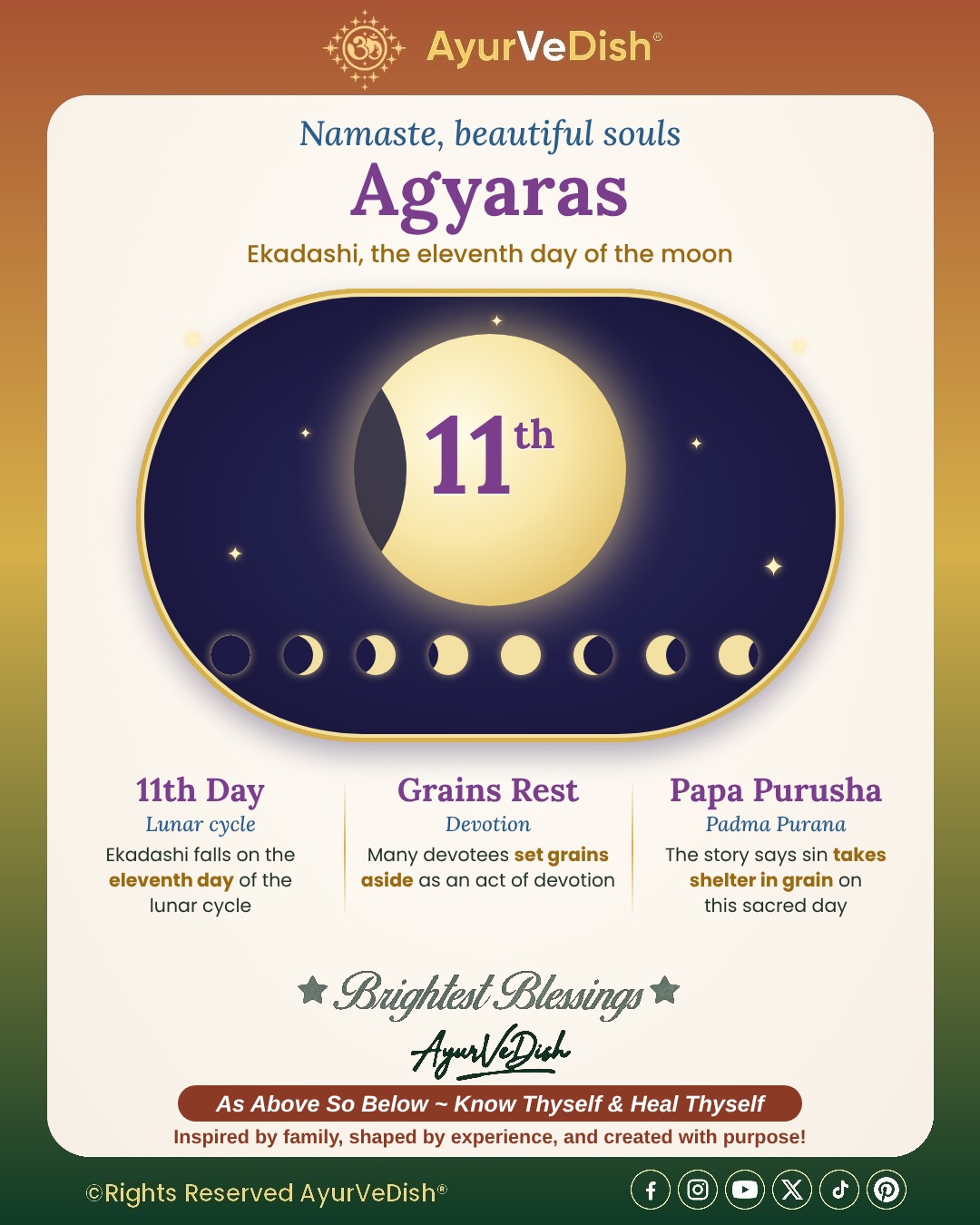
The idea of abstaining from grains is not new. In Hindu tradition, Ekadashi, known as Agyaras in Gujarati, falls on the eleventh day of the lunar cycle. Many devotees traditionally avoid grains on this day as an act of devotion and spiritual discipline.
The Padma Purana (Kriya Yogasara, 22.46 and 22.50) tells of Papa Purusha, sin personified, who takes refuge in anna, food grains, on Ekadashi. It says that on that day, all the sins of the three worlds reside in grains. For devotees, this is the traditional spiritual reason for avoiding grains on this sacred day.
Think about what that story says. In that culture, grain is where sin takes shelter. It is one of the most powerful messages our ancestors left us about what to put on our plates, and an invitation to reflect on food, discipline, tradition and conscious living.
Where We Part Ways With Traditional Ayurveda
Ayurveda’s Charaka Samhita lists rice and barley among the foods to be eaten regularly, alongside milk, ghee and honey (Sutra Sthana 5.12). We understand why. But grains today are not the grains of Charaka’s day. They have been bred for yield, milled into white flour and baked into ultra-processed foods the ancients never saw, and rice, as we set out below, takes up more arsenic than other cereal crops. So we follow the older message our ancestors left in Agyaras, and we keep our grain free completely seed based.
Think about when these words were written, around 2,000 years ago. There were no fridges, no freezers and no shops full of fresh food all year round. Harvests could fail, winters were hard, and people lived on whatever the land and their animals could give them. Grain could be dried and stored for the lean months, when nothing else would keep, so it was a lifeline, and we believe that is why the texts valued it. Today we have a vast array of seeds, pulses and vegetables all year round, so we no longer need to lean on grain.
An Invitation to Think Differently
Grain-free living is simply another way to approach everyday food. Instead of leaning on familiar grain-based staples, we can explore the many ingredients around us: vegetables, pulses, herbs, seeds and alternative flours.
When we say grain free, we mean it completely. Our complete grain free is made only from seeds, and from a vast array of them, never from one single seed. Each one brings its own character, taste and goodness to the plate.
Our Grain Free Flours and Bakes
Our grain free plain all-purpose flour is pliable, so it rolls out beautifully for pastry and for pizza bases. Our grain free bread mix makes a pizza base too. Alongside them you will find our grain free atta and self raising flour, our grain free savoury premixes for dosa, dhokla, thepla and falafel, and our grain free cupcakes, muffins, banana bread, pancakes and biscuits, made without cane sugar, egg or dairy. Our rice-type dishes are made from seeds, with no rice at all.

What Researchers Have Found
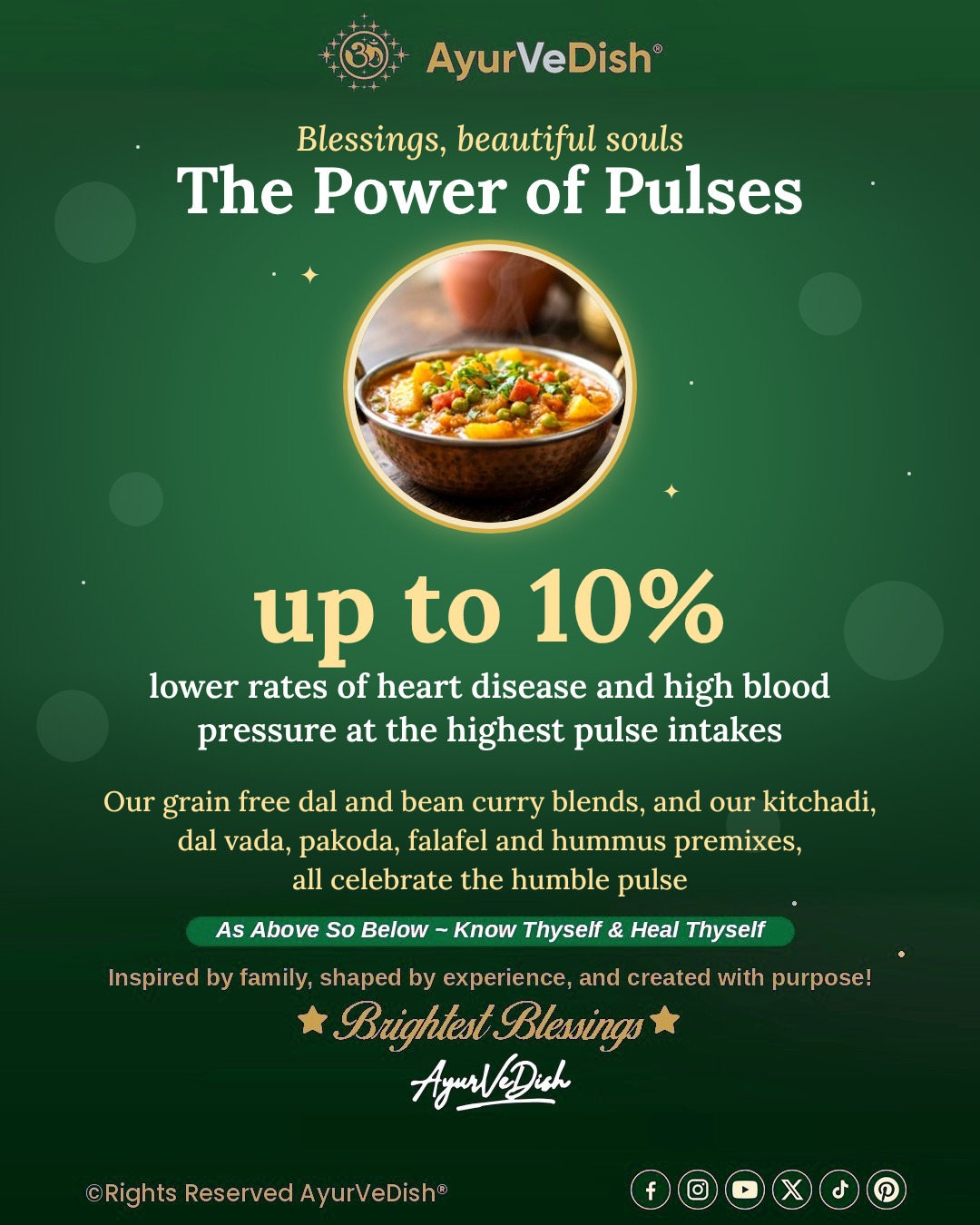
The humble pulse. In a review of 26 randomised trials with 1,037 people, Dr Vanessa Ha and colleagues found that about one serving of beans, chickpeas, lentils or peas a day, a median of 130g, significantly lowered LDL cholesterol, by 0.17 mmol/L. An umbrella review by Dr Effie Viguiliouk and colleagues, reported by the Physicians Committee for Responsible Medicine, linked the highest intakes of pulses and other legumes to rates of cardiovascular disease, coronary heart disease and high blood pressure as much as 10 per cent lower.
Seeds That Work Hard
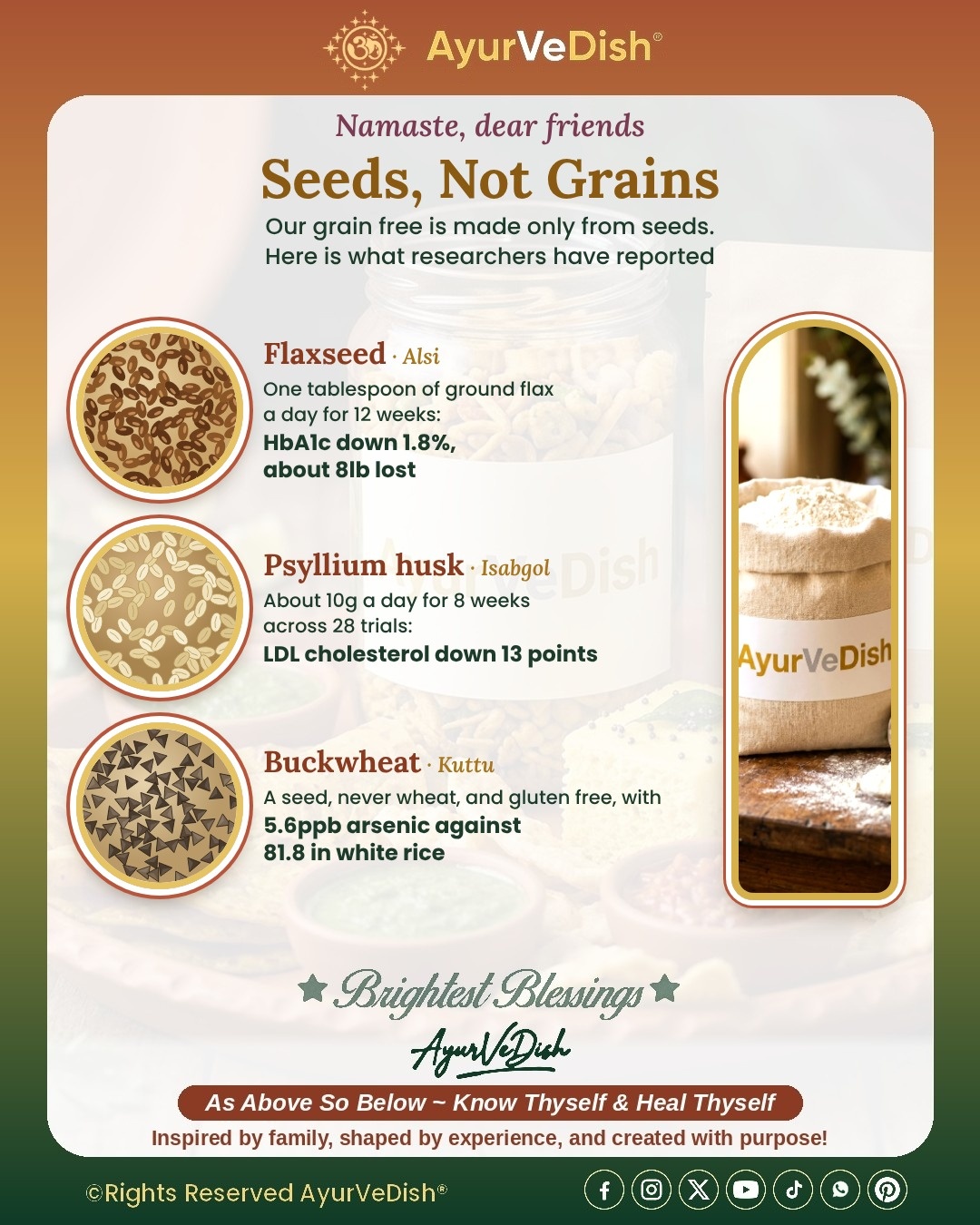
Flaxseed. Dr Michael Greger of NutritionFacts.org reports a trial in which people with type 2 diabetes ate about one tablespoon of ground flaxseed a day, baked into cookies, for 12 weeks. Compared with placebo, HbA1c was 1.8 percentage points lower, weight about 8lb lower and LDL cholesterol 17 points lower.
Psyllium husk (isabgol). In the review of 28 randomised trials that Dr Greger reports, around 10g of psyllium a day for 8 weeks lowered LDL cholesterol by 13 points.
Buckwheat: It Sounds Like Wheat, But It Is Not
Buckwheat has wheat in its name, but it is not wheat. It is a seed. Botanically it belongs to the buckwheat family, Polygonaceae, alongside rhubarb and sorrel. It is neither a grass nor a cereal, and it contains no gluten. We love it for its deep, nutty character.
Food should be full of flavour, variety and joy. Going grain-free need not mean losing the pleasure of a satisfying meal or the delight of new tastes.
We Do the Research, So You Do Not Have To
We read the studies, check the sources and question the headlines, so that you can simply enjoy your food. That includes rice.
On arsenic, Consumer Reports tested a range of alternative grains in 2014 and found buckwheat averaged just 5.6 parts per billion of inorganic arsenic. White rice averaged 81.8 and brown rice 146.4.
Rice tends to take up more arsenic from the environment than other cereal crops, and the UK Food Standards Agency advises that children under five should not be given rice drinks in place of milk. A University of Sheffield study led by Dr Manoj Menon found that 28 of 55 rice samples sold in the UK were above the European limits for rice intended for infants and young children. Brown rice carried more than white.
We also looked into the stories about “plastic rice”. Fact-checkers have investigated them and rated the claims false. In Nigeria in 2016, bags seized as suspected plastic rice were tested and no plastic was found. We would rather you hear what is confirmed than what is rumoured.
If We Were to Use a Grain
Of all the grains, if we were to use one, we would choose millet. Millets are hardy cereal grasses, and we feel they are better than the other grains, for good reasons.
They need far less water. Kumar and colleagues report that pearl millet and proso millet can grow on as little as 20cm of rainfall, where rice needs an average of 120 to 140cm, and that most millets are ready 60 to 90 days after sowing, against 120 to 140 days for rice.
They also carry far less arsenic. Adomako, Williams, Deacon and Meharg found that Ghanaian maize, sorghum and millet together averaged 0.01mg/kg of total arsenic, an order of magnitude lower than in rice at 0.11mg/kg. Consumer Reports found millet averaged 12.1 parts per billion of inorganic arsenic, against 81.8 for white rice.
Even so, millet is still a grain, a member of the grass family Poaceae. So we do not use it, and we do not promote it. Our grain free stays seeds only.
An Invitation
No single way of eating suits everyone. The invitation is simply to question, explore and make informed choices about what finds its way onto your plate. Our ancestors left us the clues. What you do with them is up to you.
Let Food Be Thy Medicine Before Medicine Becomes Thy Food.
As Above, So Below, Know Thyself and Heal Thyself.
Inspired by family, shaped by experience, and created with purpose!
Brightest Blessings

This page is for information only. For medical advice, please speak to a qualified professional.
Evidence and Sources
- Snir A et al. The origin of cultivation and proto-weeds, long before Neolithic farming. PLOS ONE 2015;10(7):e0131422. doi.org/10.1371/journal.pone.0131422
- Padma Purana, Kriya Yogasara 22.46 and 22.50, on grains and Ekadashi. veda.harekrsna.cz/encyclopedia/ekadasi.htm wisdomlib.org/hinduism/book/padma-purana-sanskrit/d/doc484983.html
- Ha V et al. Effect of dietary pulse intake on established therapeutic lipid targets for cardiovascular risk reduction: a systematic review and meta-analysis of randomized controlled trials. Canadian Medical Association Journal 2014;186(8):E252-E262. pubmed.ncbi.nlm.nih.gov/24710915
- Viguiliouk E et al. Associations between dietary pulses alone or with other legumes and cardiometabolic disease outcomes: an umbrella review and updated systematic review and meta-analysis of prospective cohort studies. Advances in Nutrition 2019;10(Suppl 4):S308-S319, via the Physicians Committee for Responsible Medicine. pcrm.org/news/health-nutrition/legumes-improve-heart-health
- Dr Michael Greger, NutritionFacts.org, on psyllium and flaxseed (citing Soltanian and Janghorbani, Nutrition & Metabolism 2018, and Jovanovski et al., American Journal of Clinical Nutrition 2018). nutritionfacts.org/video/the-health-benefits-of-psyllium-flaxseeds-and-other-high-fiber-foods
- Buckwheat and the family Polygonaceae. britannica.com/plant/buckwheat britannica.com/plant/Polygonaceae
- Beyond Celiac, is buckwheat gluten free? beyondceliac.org/gluten-free-diet/is-buckwheat-gluten-free
- Consumer Reports (November 2014), arsenic in rice and alternative grains. advocacy.consumerreports.org/wp-content/uploads/2019/05/CR_FSASC_Arsenic_Analysis_Nov2014.pdf
- UK Food Standards Agency, arsenic in rice. gov.uk/government/publications/arsenic-in-rice/arsenic-in-rice
- Menon M et al., University of Sheffield (2020), Ecotoxicology and Environmental Safety. sheffield.ac.uk/sustainable-food/news/half-uk-rice-breaches-limits-arsenic-children-warn-scientists
- Logically Facts (29 June 2020), plastic rice. logicallyfacts.com/en/fact-check/false-plastic-rice-from-china
- Kumar A et al. Agriculture & Food Security 2018;7:31. link.springer.com/article/10.1186/s40066-018-0183-3
- Adomako EE, Williams PN, Deacon C, Meharg AA. Environmental Pollution 2011;159(10):2435-2442. eprints.lancs.ac.uk/id/eprint/53969
- Millet, family Poaceae. britannica.com/plant/millet-plant
- Charaka Samhita, Sutra Sthana 5.12 (foods to be taken regularly). siva.sh/caraka-samhita/sutra-sthana/5/11-15