 AyurVeDish®
About us
Why AyurVeDish ExistsAyurveda at Our HeartOur Free-From PromiseWhole Food, Plant-Based LivingWhy Grain FreeWhy Oil FreeWhy Dairy FreeWhy Yeast FreeWhy Cane Sugar FreeWhy Soy FreeWhy Thoughtful IngredientsFresh and SeasonalHerbs and SpicesFood from Around the WorldGood Food for EveryoneA Recipe Should Inspire YouEat to LiveSalt, Spice and BalanceAyurveda
Ayurveda Made SimpleThe Five ElementsThe Three DoshasVataPittaKaphaPrakritiYour Dosha CombinationEating for Your ConstitutionChoosing Foods ThoughtfullyThe Six TastesSix Tastes on One PlateFood QualitiesAgni (Fire)Herbs and Spices in the Ayurvedic KitchenEating With the SeasonsAyurveda and the Body ClockFasting: The Ancient PauseBuilding a Plant-Based Ayurvedic MealAyurveda and Modern NutritionFood Combinations and Meal PlanningShop
Speciality All-in-One BlendsGrain Free Rice-Style BlendsSnack & Savoury PremixesGrain Free FloursBakes & DessertsChutneys, Dips & PicklesTadkas & Finishing SpicesDetox & Ayurvedic TeasHot & Cold Drinks





Spice Explorer
Spice Explorer: Meet Your Spices 💛
Namaste, and welcome to Spice Explorer, our free tool for getting to know twenty-six everyday Indian spices. ✨
Tap a spice to see what it is, how we use it and one thing worth knowing. There is nothing to sign up for and nothing to download.
Twenty-six spices, one tap each, from turmeric and chilli to garlic, ginger and curry leaves. 💛
A Sanskrit line on food
Annad vai prajah prajayante. Yah kashcha prithivim shritah.
From food all beings are born, all that live upon the earth.
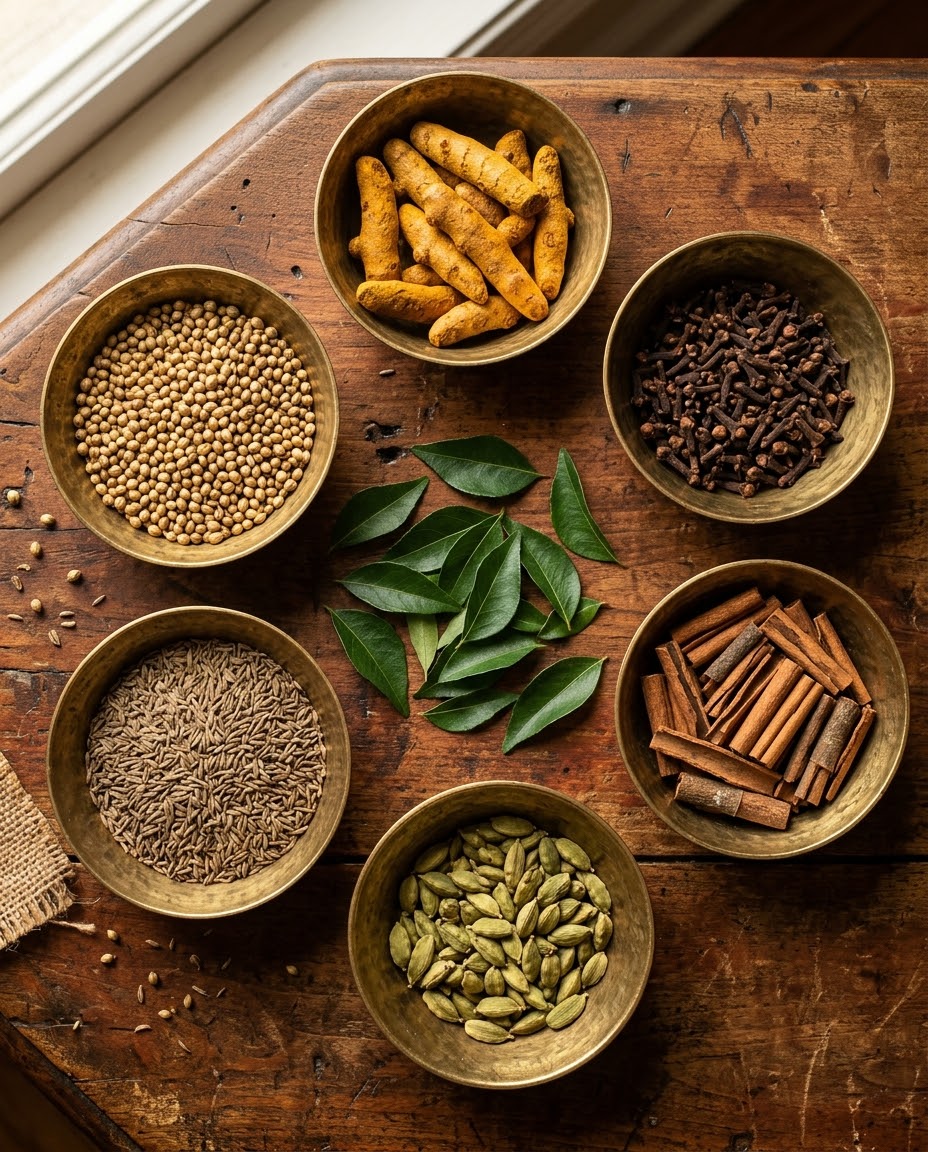
Pick a Spice 🌟
Tap a spice to see how we use it. 👇
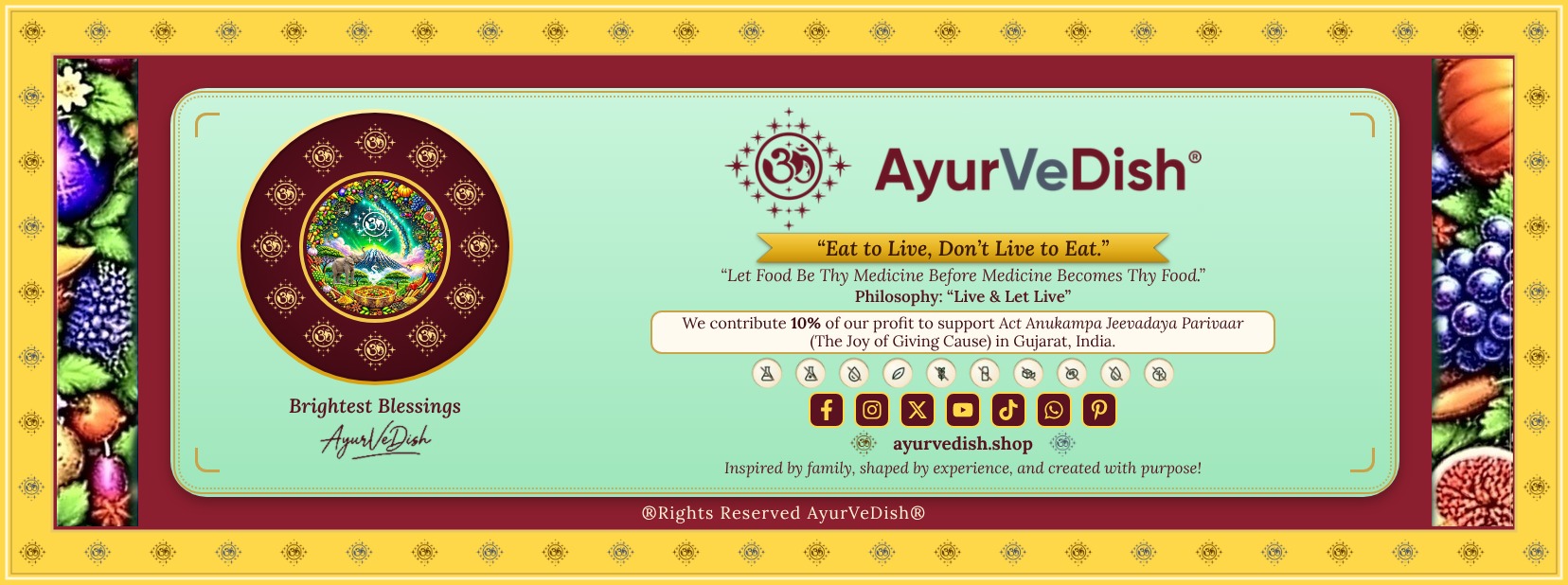
Spices, Made Simple 💛
Spice Explorer brings our everyday spice cupboard to your screen, with a simple idea for each spice.
Our grain free premixes and our oil free curry and dal blends use these same spices, with tadkas optional, so they sit naturally beside this page.
How Ayurveda Reads a Spice
Ayurveda reads a spice in three steps. Rasa is the taste on the tongue: most spices are pungent, some are bitter, sweet, sour or astringent. Virya is the potency, heating or cooling, that a spice carries into the body, and vipaka is the taste-effect left after digestion, which need not match the first taste: dry ginger is pungent on the tongue yet sweet after digestion. Where the classical texts overturn the obvious reading we follow them, so salt, not pungent, is the most heating taste, Charaka calls black pepper not excessively hot, and chilli, a New World plant, has no classical rating at all.
Classical Ratings at a Glance
Only the spices whose ratings we could trace to the classical texts of Charaka, Suśruta and Vāgbhaṭa are listed. “Not stated” means the verse gives no rating. Every card above also carries its names, botanical name, storage and care notes.
| Spice | Taste (rasa) | Potency (virya) | Post-digestive effect (vipaka) | Main dosha effect (traditional) |
|---|---|---|---|---|
| Black pepper | Pungent | Heating (not excessively) | Pungent | Eases kapha and vata |
| Ginger (dry) | Pungent | Heating | Sweet | Eases vata and kapha |
| Garlic | Pungent | Heating | Not stated | Counters vata |
| Cumin | Pungent | Heating | Not stated | Eases vata and kapha; can raise pitta |
| Coriander seed | Slightly bitter and pungent | Not stated | Sweet | Eases vata and kapha |
| Ajwain | Not stated | Not stated | Not stated | Eases vata and kapha; raises pitta |
| Pure hing (asafoetida) | Pungent | Heating | Pungent | Eases vata and kapha; can provoke pitta |
| Cardamom, cinnamon, Indian bay (trijātaka) | Not stated | Heating | Not stated | Raises pitta |
| Himalayan pink salt (as saindhava) | Salty, slightly sweet | Not heating | Sweet (general rule) | Balances all three |
| Kala namak (as sauvarcala) | Salty | Heating | Not stated | Eases vata |
| Anardana (pomegranate) | Sour, astringent, sweet | Warm | Not stated | Eases vata; dry sour kind can provoke pitta |
Two Spice Tips to Try Today 🌿
Turmeric with black pepper: we always add a pinch of black pepper when we cook with turmeric. A study found that piperine from black pepper raised curcumin absorption in people. 🌟
Dry toast, no oil: warm whole cumin or mustard seeds in a dry pan for a minute until fragrant, then add them to dal or vegetables. 💛
Know someone who loves cooking with spices? Send them Spice Explorer. 🙏
Let Food Be Thy Medicine Before Medicine Becomes Thy Food.
As Above, So Below, Know Thyself and Heal Thyself.
Inspired by family, shaped by experience, and created with purpose!
Brightest Blessings

This page is for information only. For medical advice, please speak to a qualified professional.
Evidence and Sources
- Taittiriya Upanishad 2.2, Sanskrit text and meaning. shlokam.org
- Shoba G, et al. Influence of piperine on the pharmacokinetics of curcumin in animals and human volunteers. Planta Medica 1998;64(4):353-356. pubmed.ncbi.nlm.nih.gov
- Food Safety and Standards Authority of India (FSSAI), FAQ on asafoetida and compounded asafoetida. fssai.gov.in
- Charak Samhita, Sutrasthana 27, Annapanavidhi (Jaiswal, Mandal and Deole, translators). carakasamhitaonline.com
- Jang, Lee, Lee and colleagues, Scientific Reports, 2020. nature.com
- Chopan and Littenberg, PLoS ONE, 2017. doaj.org
- Wang, Yang, Qin and Yang, Journal of Clinical Hypertension, 2015. pubmed.ncbi.nlm.nih.gov
- Jafarnejad, Keshavarz and colleagues, Journal of Functional Foods, 2017: ginger, blood glucose and lipids, meta-analysis. doaj.org
- Jafarnejad, Tsang and colleagues, Journal of Functional Foods, 2018: cumin, meta-analysis. doaj.org
- Food Science and Nutrition, 2024: cardamom, inflammation and blood pressure, systematic review and meta-analysis. doaj.org
- Allen and colleagues, Annals of Family Medicine, 2013. annfammed.org
- Verma and colleagues, JMS, 2024: the medicinal properties of clove, a systematic review. jms.ump.edu.pl
- Shahrahmani and colleagues, Journal of Complementary and Integrative Medicine, 2021. degruyterbrill.com
- Minniti and colleagues, Life, 2023. mdpi.com
- Pakistan Journal of Medicine and Dentistry, May 2024: Murraya (curry leaf) in rabbits. doaj.org
- NHS: salt in your diet. nhs.uk
- Neelakantan and colleagues, Nutrition Journal, 2014. link.springer.com
- Khoddami and colleagues, International Journal of Nutrition Sciences, 2024. doaj.org
- Assiry and colleagues, BioMed Research International, 2021. pmc.ncbi.nlm.nih.gov
- Elfia and Susilo, Journal of Applied Pharmaceutical Science, 2023. japsonline.com
- Khan, Zaman and Anderson, Journal of Clinical Biochemistry and Nutrition, 2009. jstage.jst.go.jp
- Yang and colleagues, Neuropsychiatric Disease and Treatment, 2018. dovepress.com
- Vāgbhaṭa, Aṣṭāṅga Hṛdaya, Sūtrasthāna 6, Sanskrit text. siva.sh
- Suśruta Samhita, Sūtrasthāna 46, Food and Drink (Bhishagratna, translator, 1907). chestofbooks.com
- Charak Samhita Online, Haridra (turmeric). carakasamhitaonline.com
- Charak Samhita Online, Lavanga (clove), drawing on the Ayurvedic Pharmacopoeia of India. carakasamhitaonline.com
- Charak Samhita Online, Kumkuma (saffron). carakasamhitaonline.com
- Charak Samhita Online, Tejapatra (Indian bay leaf). carakasamhitaonline.com
- Charak Samhita Online, Shatapushpa (dill, not fennel). carakasamhitaonline.com
- German Federal Institute for Risk Assessment (BfR), FAQ on coumarin in cinnamon and other foods, 2012. bfr.bund.de
- NutraIngredients, FDA warning on star anise teas, 2003. nutraingredients.com
- Tennessee Poison Center, Vanderbilt University Medical Center, nutmeg toxicity, 2020. vumc.org
- Avila Sosa and colleagues, Encyclopedia (MDPI), 2022: saffron authentication. encyclopedia.pub
- Food Standards Agency, allergen guidance for food businesses (the 14 allergens). gov.uk