 AyurVeDish®
About us
Why AyurVeDish ExistsAyurveda at Our HeartOur Free-From PromiseWhole Food, Plant-Based LivingWhy Grain FreeWhy Oil FreeWhy Dairy FreeWhy Yeast FreeWhy Cane Sugar FreeWhy Soy FreeWhy Thoughtful IngredientsFresh and SeasonalHerbs and SpicesFood from Around the WorldGood Food for EveryoneA Recipe Should Inspire YouEat to LiveSalt, Spice and BalanceAyurveda
Ayurveda Made SimpleThe Five ElementsThe Three DoshasVataPittaKaphaPrakritiYour Dosha CombinationEating for Your ConstitutionChoosing Foods ThoughtfullyThe Six TastesSix Tastes on One PlateFood QualitiesAgni (Fire)Herbs and Spices in the Ayurvedic KitchenEating With the SeasonsAyurveda and the Body ClockFasting: The Ancient PauseBuilding a Plant-Based Ayurvedic MealAyurveda and Modern NutritionFood Combinations and Meal PlanningShop
Speciality All-in-One BlendsGrain Free Rice-Style BlendsSnack & Savoury PremixesGrain Free FloursBakes & DessertsChutneys, Dips & PicklesTadkas & Finishing SpicesDetox & Ayurvedic TeasHot & Cold Drinks





Good Food for Everyone
Simple, Welcoming and Within Reach
Namaste, and welcome.
Good food should be something everyone can enjoy, not something that feels complicated, intimidating or reserved for people with endless time to spend in the kitchen. At AyurVeDish, we believe delicious, thoughtfully prepared meals belong in everyday life, whether you are an experienced cook, learning new skills or running a busy household.
Good Food Does Not Have to Be Complicated
Some of the most satisfying meals begin with a handful of familiar ingredients. Vegetables, beans, lentils, herbs and spices can become a comforting soup, a hearty stew, a vibrant salad or a savoury snack. That is why we make things easy. Our curry and dal blends are complete, all-in-one blends: add your vegetables, pulses or beans and water, then cook. One 100g pouch makes about 25 portions at Mild (4g), 14 at Medium (7g) or 10 at Extra Hot (10g), each for 200g of vegetables. Our grain free premixes need only water or plant milk, then cooking or baking.
Thoughtful Eating on Any Budget
A varied plant-based diet does not depend on expensive speciality ingredients. Dried or tinned beans, lentils and peas, seasonal vegetables and potatoes are familiar, versatile and economical. Planning meals around what you already have, using leftovers creatively and storing food well make a food budget go further.
What the Ancient Texts Say
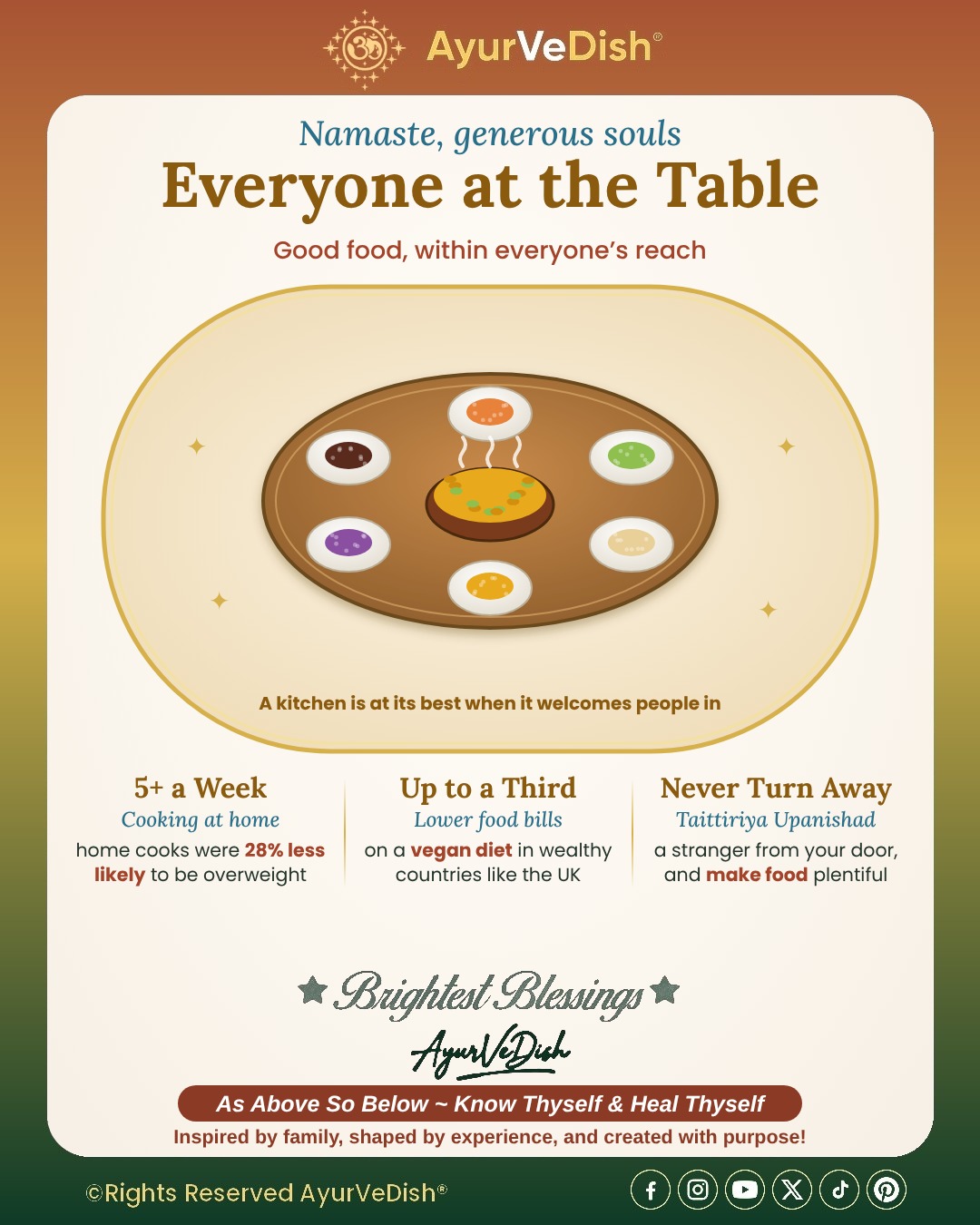
Our ancestors treated food as something to be shared. The Taittiriya Upanishad sets down the rule: “Let him never turn away a stranger from his house, that is the rule”, and so “a man should by all means acquire much food”. We read it as the oldest accessibility statement there is: good food belongs on every table, and a kitchen is at its best when it welcomes people in.
That spirit is why 10% of our profit goes to Act Anukampa Jeevdaya Parivar in Ahmedabad, which serves hot, fresh, sattvic meals to children in the slums.

What Researchers Have Found
Cooking at home. In a study of 11,396 adults aged 29 to 64 in the UK, by researchers at Newcastle University and the University of Cambridge, people who ate home-cooked main meals more than five times a week ate about 62g more fruit and 98g more vegetables a day than those who did so fewer than three times. They were 28 per cent less likely to be overweight, 24 per cent less likely to carry excess body fat, and had higher blood levels of vitamin C.
Plants Cost Less
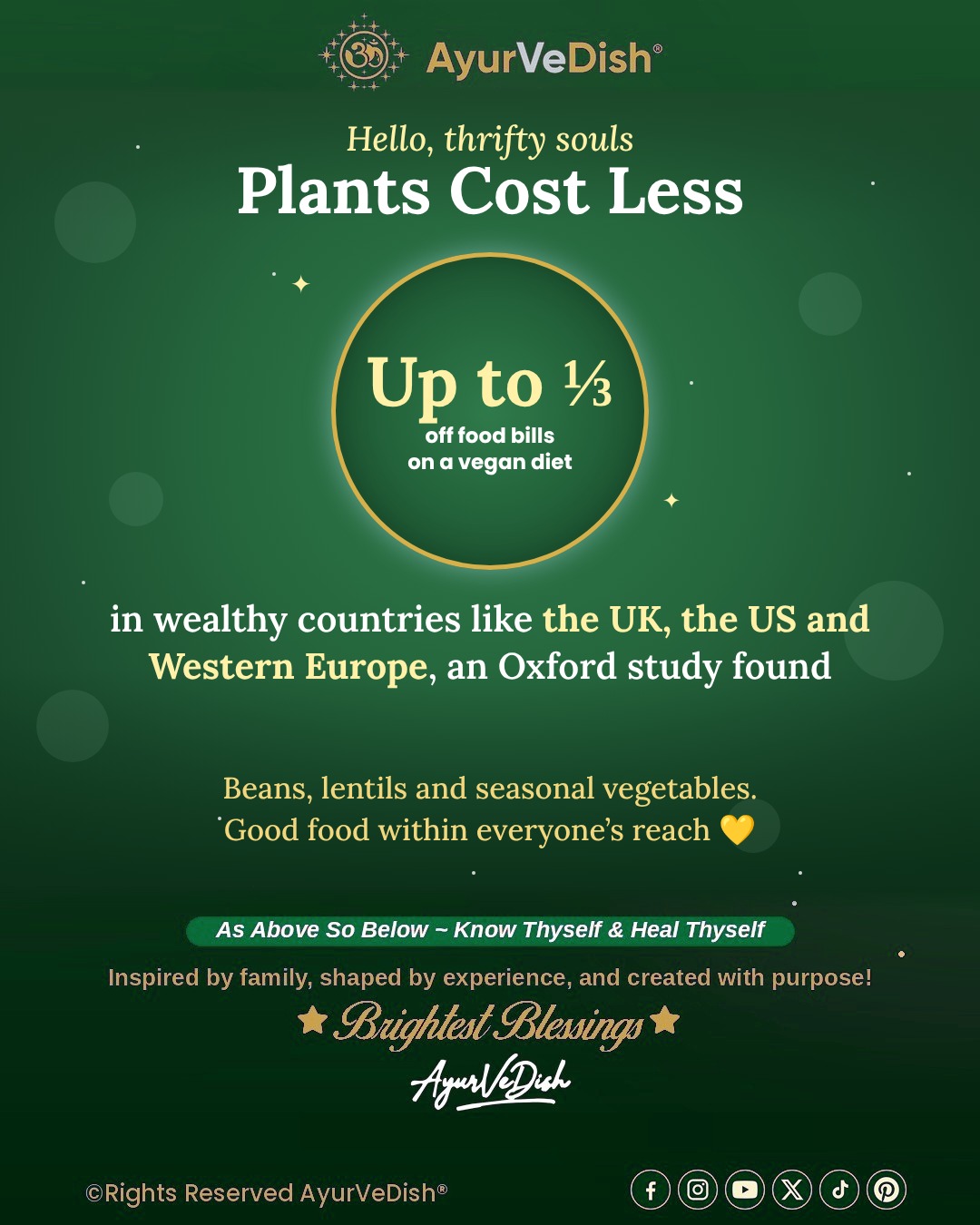
In 2021, Dr Marco Springmann of the University of Oxford and colleagues found that in high-income countries such as the UK, US, Australia and Western Europe, a vegan diet could cut food costs by up to a third, and a flexitarian diet low in meat and dairy by 14 per cent. In those same countries, a diet including fish actually cost up to 2 per cent more.
These are findings from studies, and results differ from household to household.
Confidence in the Kitchen
Not everyone grows up learning how to cook. Sometimes all that is needed is a straightforward starting point: a simple method, a trusted blend, an easy way to prepare vegetables and pulses. As confidence grows, so does the willingness to try new combinations and make them your own. There is no single right way to make a delicious meal.
Thoughtful food should not be complicated, and good food should be within everyone’s reach.
Let Food Be Thy Medicine Before Medicine Becomes Thy Food.
As Above, So Below, Know Thyself and Heal Thyself.
Inspired by family, shaped by experience, and created with purpose!
Brightest Blessings

This page is for information only. For medical advice, please speak to a qualified professional.
Evidence and Sources
- Taittiriya Upanishad III.10, translated by F. Max Müller. universalfreemasonry.org/en/library/the-upanishads-part-II/taittirîyaka-upanishad-III-10
- Mills S, Brown H, Wrieden W, White M, Adams J. Frequency of eating home cooked meals and potential benefits for diet and health: cross-sectional analysis of a population-based cohort study. International Journal of Behavioral Nutrition and Physical Activity 2017;14:109. doi.org/10.1186/s12966-017-0567-y
- Springmann M, Clark MA, Rayner M, Scarborough P, Webb P. The global and regional costs of healthy and sustainable dietary patterns: a modelling study. The Lancet Planetary Health 2021;5(11):e797-e807. doi.org/10.1016/S2542-5196(21)00251-5
- University of Oxford. Sustainable eating is cheaper and healthier. 10 November 2021. ox.ac.uk/news/2021-11-11-sustainable-eating-cheaper-and-healthier-oxford-study