 AyurVeDish®
About us
Why AyurVeDish ExistsAyurveda at Our HeartOur Free-From PromiseWhole Food, Plant-Based LivingWhy Grain FreeWhy Oil FreeWhy Dairy FreeWhy Yeast FreeWhy Cane Sugar FreeWhy Soy FreeWhy Thoughtful IngredientsFresh and SeasonalHerbs and SpicesFood from Around the WorldGood Food for EveryoneA Recipe Should Inspire YouEat to LiveSalt, Spice and BalanceAyurveda
Ayurveda Made SimpleThe Five ElementsThe Three DoshasVataPittaKaphaPrakritiYour Dosha CombinationEating for Your ConstitutionChoosing Foods ThoughtfullyThe Six TastesSix Tastes on One PlateFood QualitiesAgni (Fire)Herbs and Spices in the Ayurvedic KitchenEating With the SeasonsAyurveda and the Body ClockFasting: The Ancient PauseBuilding a Plant-Based Ayurvedic MealAyurveda and Modern NutritionFood Combinations and Meal PlanningShop
Speciality All-in-One BlendsGrain Free Rice-Style BlendsSnack & Savoury PremixesGrain Free FloursBakes & DessertsChutneys, Dips & PicklesTadkas & Finishing SpicesDetox & Ayurvedic TeasHot & Cold Drinks





Whole Food, Plant-Based Living
Nature’s Abundance on Your Plate
Namaste, and welcome.
Food connects us to nature, culture, tradition and one another. In a world full of highly processed convenience foods, it is easy to forget the wonderful variety the earth gives us.
The Abundance of the Plant Kingdom
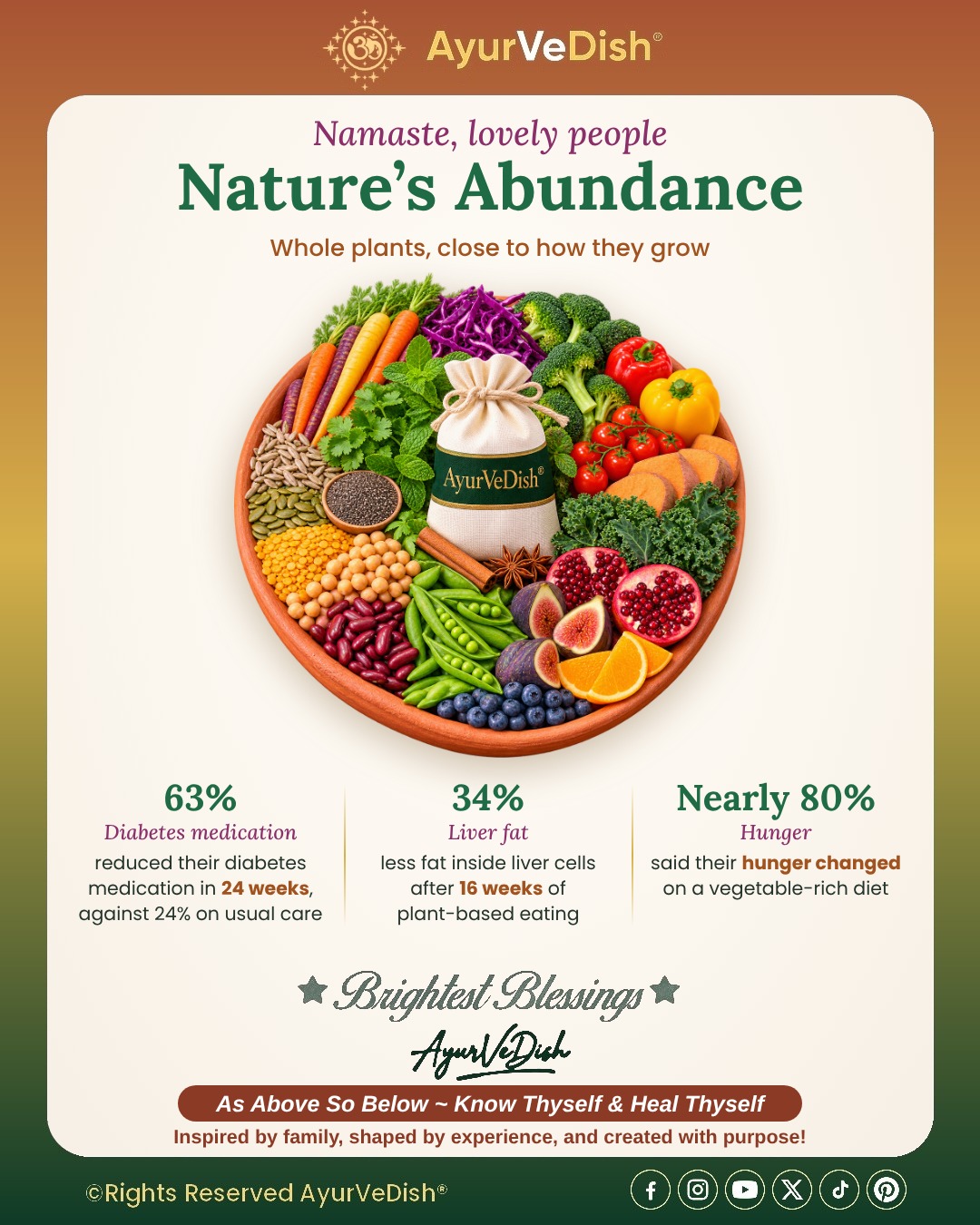
Vegetables, fruits, beans, lentils, peas, herbs, spices and seeds offer an extraordinary range of colours, textures and flavours. Whole food, plant-based eating celebrates these foods close to their natural state, from comforting soups and vibrant salads to hearty stews, savoury snacks, dips and imaginative twists on old favourites.
What the Ancient Texts Say
The very first food given in the Bible is plant-based. In Genesis, chapter 1, verse 29, God says: “Behold, I have given you every herb bearing seed, which is upon the face of all the earth, and every tree, in the which is the fruit of a tree yielding seed; to you it shall be for meat.”
Herbs, seeds and fruit, given as food from the very beginning. That is the table we set at AyurVeDish.
Our philosophy brings together whole food, plant-based living and the Ayurvedic appreciation of food, balance and mindful eating. Every AyurVeDish product is made for this way of eating, from our grain free flours and savoury premixes to our chutneys, teas and drinks. Whether you already live this way or are simply curious, you are very welcome here.
Where We Part Ways With Traditional Ayurveda
Ayurveda is not a plant-based tradition. The Charaka Samhita lists the meat of land animals, milk and ghee among the foods to be eaten regularly (Sutra Sthana 5.12). We honour its wisdom on balance, digestion and the doshas, but on animal foods we part ways, for the reasons that follow.
Think about when these words were written, around 2,000 years ago. There were no fridges, no freezers and no shops full of fresh food all year round. Harvests could fail, winters were hard, and people lived on whatever the land and their animals could give them. In that world, meat could mean the difference between getting through a lean season or not, and we believe that is why the texts made room for it. Our world is different. We have plant foods in abundance every day of the year, and the science to show us the harm.
We love the planet we live on and every creature we share it with. We believe in the bigger order, in which every life matters, and we give 10% of our profit to Act Anukampa Jeevdaya Parivar in Ahmedabad, which cares for animals in shelters and hospitals and serves hot, fresh, sattvic meals to children in the slums.
What We Leave Off the Plate
In 2015 the International Agency for Research on Cancer, part of the World Health Organization, classified processed meat as carcinogenic to humans, its strongest category of evidence, and red meat as probably carcinogenic. Its experts found that every 50g of processed meat eaten daily raised the risk of bowel cancer by about 18 per cent. A whole food, plant-based plate leaves all of it out.
What Researchers Have Found
For ten years we have followed the doctors who brought whole food, plant-based eating into the clinic. Here is some of what they found.
Blood sugar, without counting calories. In 2006 Dr Neal Barnard and colleagues put 99 adults with type 2 diabetes on either a low-fat vegan diet, with no measuring of portions or counting of calories, or a standard diabetes diet, for 22 weeks. Among those whose medication stayed the same, HbA1c fell by 1.23 points on the vegan diet, against 0.38 on the standard diet. 43 per cent of the vegan group were able to reduce their diabetes medication, against 26 per cent.
Less medication. In a randomised trial in the Marshall Islands, published in 2024, adults with type 2 diabetes followed a whole food, plant-based diet with regular exercise, with full support for 12 weeks and then on their own to 24 weeks. 63 per cent of those on medication were able to reduce their glucose-lowering medication, against 24 per cent on standard care, and 8 per cent reached remission, against none.
Liver, Hunger and the Heart
Liver fat. In a 16-week trial of 244 overweight adults, led by Dr Hana Kahleova with Dr Barnard and colleagues and published in 2020, those who ate a low-fat, plant-based diet improved their insulin sensitivity. In the 44 whose livers were scanned, the fat inside their liver cells fell by 34 per cent.
Hunger. Dr Joel Fuhrman and colleagues surveyed 768 people eating a nutrient-rich, vegetable-filled diet. Nearly 80 per cent said their experience of hunger had changed, and 51 per cent described a dramatic or complete change.
A Happier Heart
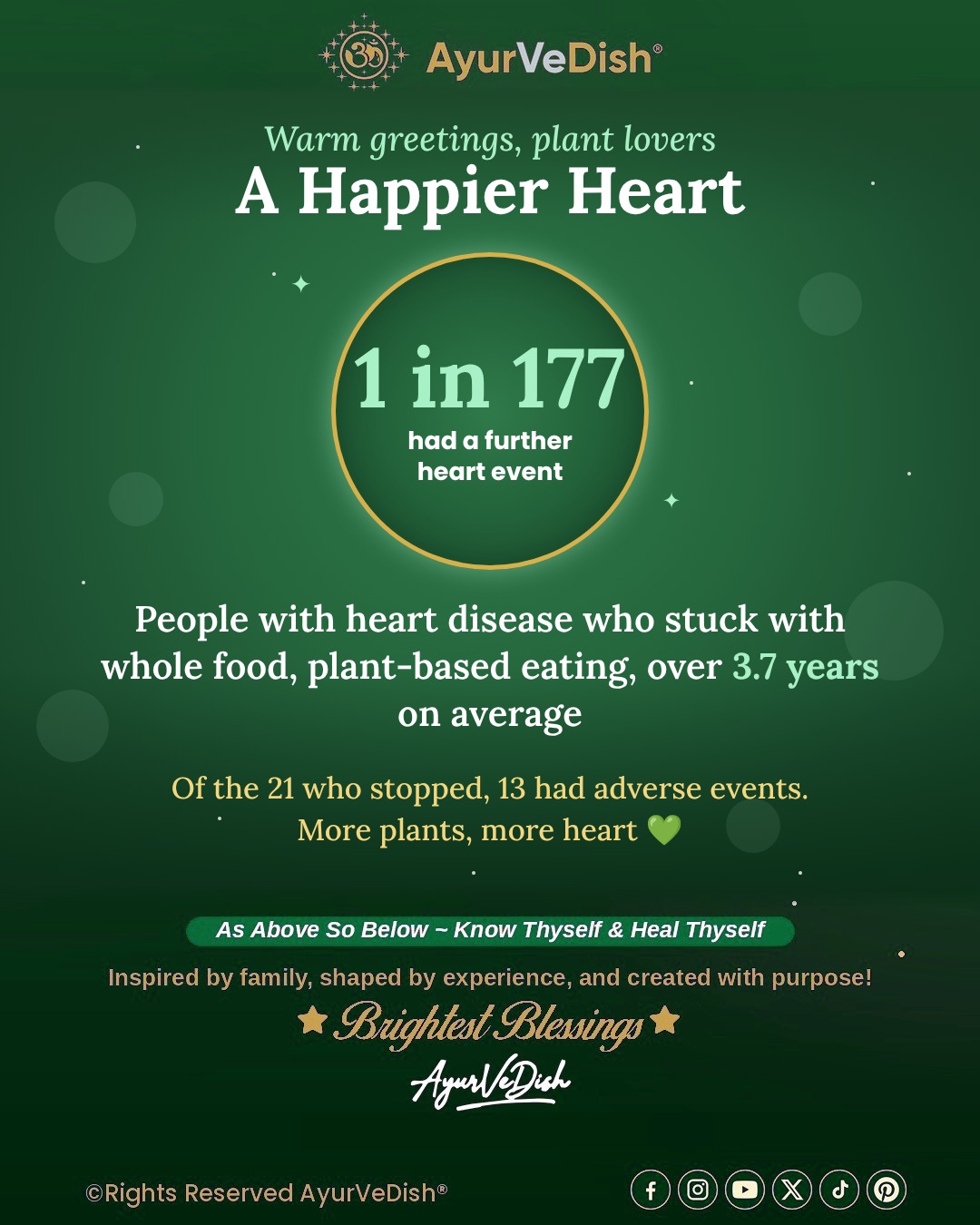
Dr Caldwell Esselstyn followed 198 people with heart disease who chose to change to whole food, plant-based eating. Of the 177 who stuck with it, for an average of 3.7 years, just one, 0.6 per cent, had a further event judged to be their disease, a stroke. Of the 21 who did not, 13 had adverse events, 62 per cent.
These were specific studies, not all of them randomised or controlled, and results differ from person to person. If you take medication, please speak to your doctor before changing your diet.
Looking Beyond Ultra-Processed Foods
In 2019 Dr Kevin Hall and his team at the US National Institutes of Health gave 20 adults two weeks of ultra-processed meals and two weeks of unprocessed meals, matched for calories, sugar, fat and fibre, and let them eat as much as they liked. On the ultra-processed meals they ate about 500 extra calories a day and gained about 0.9kg. On the unprocessed meals they lost about the same.
A More Conscious Way to Eat
Convenience need not mean heavily processed food. Reading ingredient lists, enjoying simpler recipes and cooking for ourselves is a lovely way to rediscover the pleasure of food.
More plants. More flavour. More creativity.
Let Food Be Thy Medicine Before Medicine Becomes Thy Food.
As Above, So Below, Know Thyself and Heal Thyself.
Inspired by family, shaped by experience, and created with purpose!
Brightest Blessings

This page is for information only. For medical advice, please speak to a qualified professional.
Evidence and Sources
- The Bible, Book of Genesis, chapter 1, verse 29 (King James Version). biblia.com/bible/kjv/genesis/1/29
- Barnard ND, Cohen J, Jenkins DJA, Turner-McGrievy G, Gloede L, Jaster B, Seidl K, Green AA, Talpers S. A low-fat vegan diet improves glycemic control and cardiovascular risk factors in a randomized clinical trial in individuals with type 2 diabetes. Diabetes Care 2006;29(8):1777-1783. pubmed.ncbi.nlm.nih.gov/16873779
- Physicians Committee for Responsible Medicine. A Vegan Diet for Diabetes Control. pcrm.org/news/health-nutrition/vegan-diet-diabetes-control
- Hanick CJ, Peterson CM, Davis BC, Sabaté J, Kelly JH Jr. A whole-food, plant-based intensive lifestyle intervention improves glycaemic control and reduces medications in individuals with type 2 diabetes: a randomised controlled trial. Diabetologia 2025;68(2):308-319. pmc.ncbi.nlm.nih.gov/articles/PMC11732952
- Esselstyn CB Jr, Gendy G, Doyle J, Golubic M, Roizen MF. A way to reverse CAD? Journal of Family Practice 2014;63(7):356-364. pubmed.ncbi.nlm.nih.gov/25198208
- Kahleova H, Petersen KF, Shulman GI et al. Effect of a low-fat vegan diet on body weight, insulin sensitivity, postprandial metabolism, and intramyocellular and hepatocellular lipid levels in overweight adults: a randomized clinical trial. JAMA Network Open 2020;3(11):e2025454. doi.org/10.1001/jamanetworkopen.2020.25454
- Fuhrman J, Sarter B, Glaser D, Acocella S. Changing perceptions of hunger on a high nutrient density diet. Nutrition Journal 2010;9:51. doi.org/10.1186/1475-2891-9-51
- Hall KD et al. Ultra-processed diets cause excess calorie intake and weight gain: an inpatient randomized controlled trial of ad libitum food intake. Cell Metabolism 2019;30(1):67-77.e3. pubmed.ncbi.nlm.nih.gov/31105044
- International Agency for Research on Cancer. IARC Monographs evaluate consumption of red meat and processed meat. Press release 240, 26 October 2015. iarc.who.int/wp-content/uploads/2018/07/pr240_E.pdf
- Charaka Samhita, Sutra Sthana 5.12 (foods to be taken regularly). siva.sh/caraka-samhita/sutra-sthana/5/11-15