 AyurVeDish®
About us
Why AyurVeDish ExistsAyurveda at Our HeartOur Free-From PromiseWhole Food, Plant-Based LivingWhy Grain FreeWhy Oil FreeWhy Dairy FreeWhy Yeast FreeWhy Cane Sugar FreeWhy Soy FreeWhy Thoughtful IngredientsFresh and SeasonalHerbs and SpicesFood from Around the WorldGood Food for EveryoneA Recipe Should Inspire YouEat to LiveSalt, Spice and BalanceAyurveda
Ayurveda Made SimpleThe Five ElementsThe Three DoshasVataPittaKaphaPrakritiYour Dosha CombinationEating for Your ConstitutionChoosing Foods ThoughtfullyThe Six TastesSix Tastes on One PlateFood QualitiesAgni (Fire)Herbs and Spices in the Ayurvedic KitchenEating With the SeasonsAyurveda and the Body ClockFasting: The Ancient PauseBuilding a Plant-Based Ayurvedic MealAyurveda and Modern NutritionFood Combinations and Meal PlanningShop
Speciality All-in-One BlendsGrain Free Rice-Style BlendsSnack & Savoury PremixesGrain Free FloursBakes & DessertsChutneys, Dips & PicklesTadkas & Finishing SpicesDetox & Ayurvedic TeasHot & Cold Drinks





Ayurveda at Our Heart
Ancient Wisdom for Today’s Table
Namaste, and welcome.
Ayurveda means “the knowledge of life”, from the Sanskrit words ayus, life, and veda, knowledge. It is one of the oldest traditions of health and wellbeing in the world, handed down through the generations for thousands of years. It sees food as far more than fuel. It looks at digestion, how a meal is prepared, the seasons, each person’s own constitution and the bond between body and mind.
These teachings sit at the heart of AyurVeDish. They shape every blend, every premix and every recipe we create.
What the Ancient Texts Say
The Charaka Samhita, the great classical text of Ayurveda, puts food at the very centre of life. In Sutrasthana 28, verse 45, it teaches that life itself has its origin in food, and so does disease. Wholesome food brings happiness, and unwholesome food brings sorrow. Thousands of years before nutrition science, the ancients were telling us that what we put on our plates shapes how we live.
Freshness, Written Into Scripture
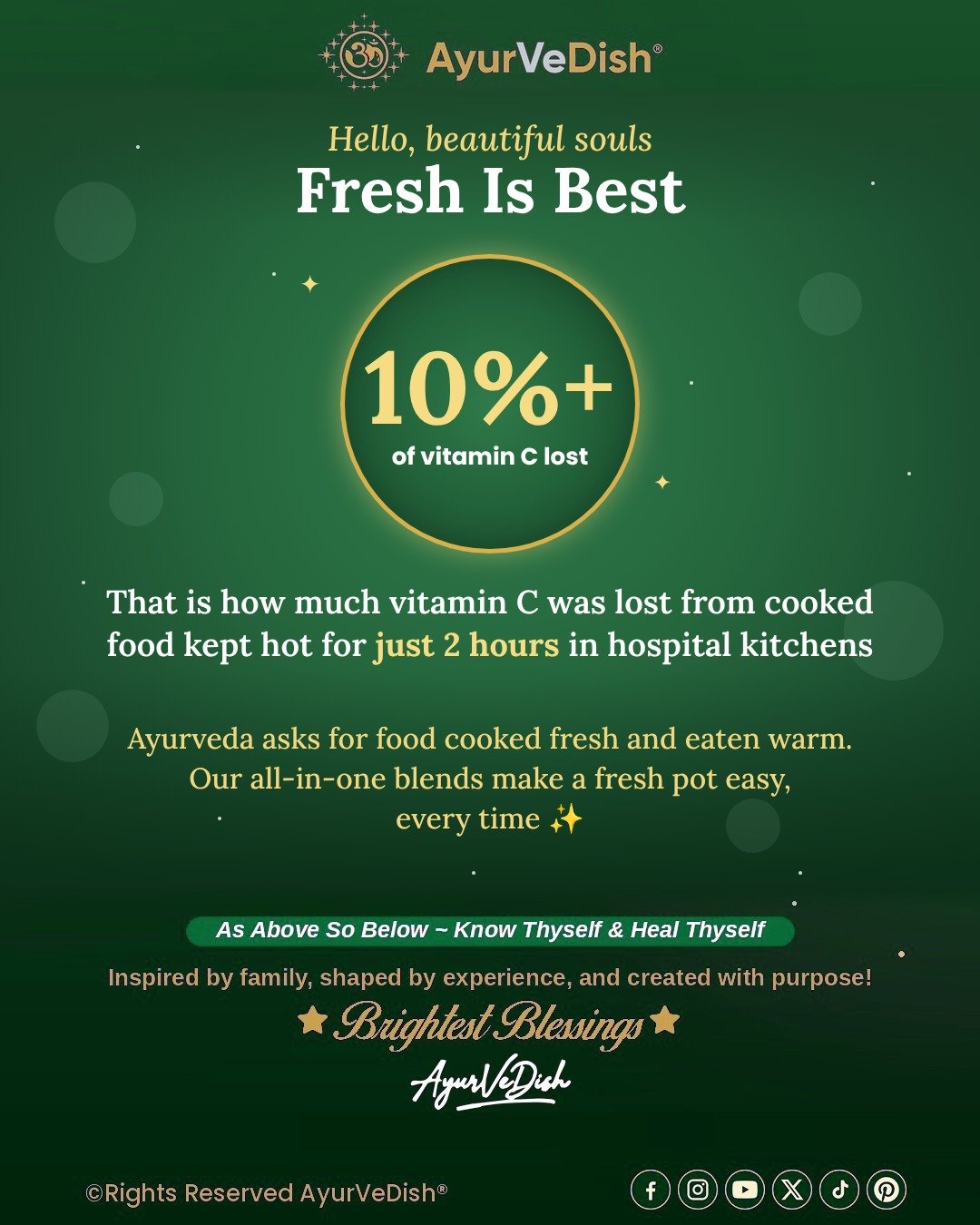
The Bhagavad Gita (17.10) goes further and speaks of freshness. It warns against food that is yata-yamam, cooked more than three hours before it is eaten, and food that is gata-rasam, tasteless and stale, and it calls this the food of tamas, darkness and heaviness. We believe the ancients often wrapped their health wisdom in devotion and scripture, because they could not always say it plainly. This verse is a perfect example: a simple kitchen rule, carried down the centuries inside a sacred text.
How Ayurveda Shapes Everything We Make
Ayurveda is the reason our range is free from so much. Our grain free means seeds only, from a vast array of varieties. Every recipe is designed for air frying and oven baking, and oil is entirely optional. We sweeten only with date sugar or coconut sugar, depending on the product, and never with refined cane sugar. Our range is also dairy free, soy free, nut free and free from active, baker’s yeast. Where a recipe needs a savoury depth, we use nutritional yeast, which is deactivated and cannot make anything rise or ferment.
Our blends are complete, all-in-one blends. Everything is already in the pouch: just add your vegetables, pulses or beans and water, then cook. One 100g pouch of a curry or dal blend makes about 25 portions at Mild (4g), 14 at Medium (7g) or 10 at Extra Hot (10g), each for 200g of vegetables.
Ancient Wisdom, Today’s Food
Ayurveda’s classic texts speak well of milk, ghee, oil, grains and even meat. We honour their wisdom, but the food of today is not the food of their day. Where we leave something out that the texts allow, our free-from pages explain exactly why.
Nine Categories, One Promise
The range reaches across nine categories: Speciality All-in-One Blends, Grain Free Rice-Style Blends, Snack and Savoury Premixes, Grain Free Flours, Bakes and Desserts, Chutneys, Dips and Pickles, our optional Tadkas and Finishing Spices, Detox and Ayurvedic Teas, and Hot and Cold Drinks. Among them you will find our grain free cupcake, banana bread, muffin, pancake and biscuit premixes, and our Instant Gujarati Srikand Dessert Premix, all made without cane sugar, egg or dairy.
Agni, Digestion and Freshness
In Ayurveda, Agni, the digestive fire, is the body’s power to digest and transform food. When Agni is strong and steady, food nourishes us well. Traditional teaching asks us to eat warm, freshly prepared meals, in the right amounts and at suitable times. That is why we love meals enjoyed soon after cooking, within three hours, in keeping with the Gita’s warning against food kept longer. You can read more on our Agni page in the Ayurveda section.
Fresh, Seasonal and Close to Nature
Ayurveda recognises the importance of season, climate, place and constitution when choosing food. Fresh, seasonal produce connects our meals with nature and the changing rhythms of the year. Vegetables, fruits, beans, lentils, herbs and spices offer wonderful variety, and they invite us to explore home cooking traditions from India and around the world.
Dosha-Informed, Every Time
Every AyurVeDish recipe and fact sheet is dosha-informed. Each one shows how the dish presents to Vata, Pitta and Kapha, and exactly how to adjust it to suit you. We have done the research, so you can sit back, enjoy your food and know it is good for you.
Sattva: Clarity, Harmony and Balance
Ayurveda associates Sattva with clarity, harmony and balance of the mind. Its teachings link what we eat with how we think and feel. Modern research is beginning to look at the same connection.
In the GEICO study, published in the American Journal of Health Promotion in 2015 by Dr Ulka Agarwal, Dr Neal Barnard and colleagues with the Physicians Committee for Responsible Medicine, 292 adults across 10 workplaces of a major US insurance company took part for 18 weeks. Those given weekly support to follow a low-fat vegan diet reported significantly less depression, anxiety and fatigue than those who kept their usual diet. They also reported better emotional wellbeing, better daily functioning and less impairment at work from their health. The participants were adults with a BMI of 25 or above, or with type 2 diabetes.
For us, Sattva means a more conscious relationship with food, from the ingredients we choose to the meals we share, bringing together respect for nature, creativity in the kitchen and compassion in every choice.
Let Food Be Thy Medicine Before Medicine Becomes Thy Food.
As Above, So Below, Know Thyself and Heal Thyself.
Inspired by family, shaped by experience, and created with purpose!
Brightest Blessings

This page is for information only. For medical advice, please speak to a qualified professional.
Evidence and Sources
- Charaka Samhita, Sutrasthana 28, Vividhashitapitiya Adhyaya, verse 45. Charak Samhita Online. carakasamhitaonline.com/index.php/Vividhashitapitiya_Adhyaya
- Bhagavad Gita, Chapter 17, verse 10 (yata-yamam). Vedabase. vedabase.io/en/library/bg/17/10/
- Agarwal U, Mishra S, Xu J, Levin S, Gonzales J, Barnard ND. A multicenter randomized controlled trial of a nutrition intervention program in a multiethnic adult population in the corporate setting reduces depression and anxiety and improves quality of life: the GEICO study. American Journal of Health Promotion 2015;29(4):245-254. pubmed.ncbi.nlm.nih.gov/24524383/
- Physicians Committee for Responsible Medicine, GEICO study summary and reference. pcrm.org/es/node/124942
- Dr Michael Greger, NutritionFacts.org, Plant-Based Diets for Improved Mood and Productivity. nutritionfacts.org/video/plant-based-diets-for-improved-mood-and-productivity/
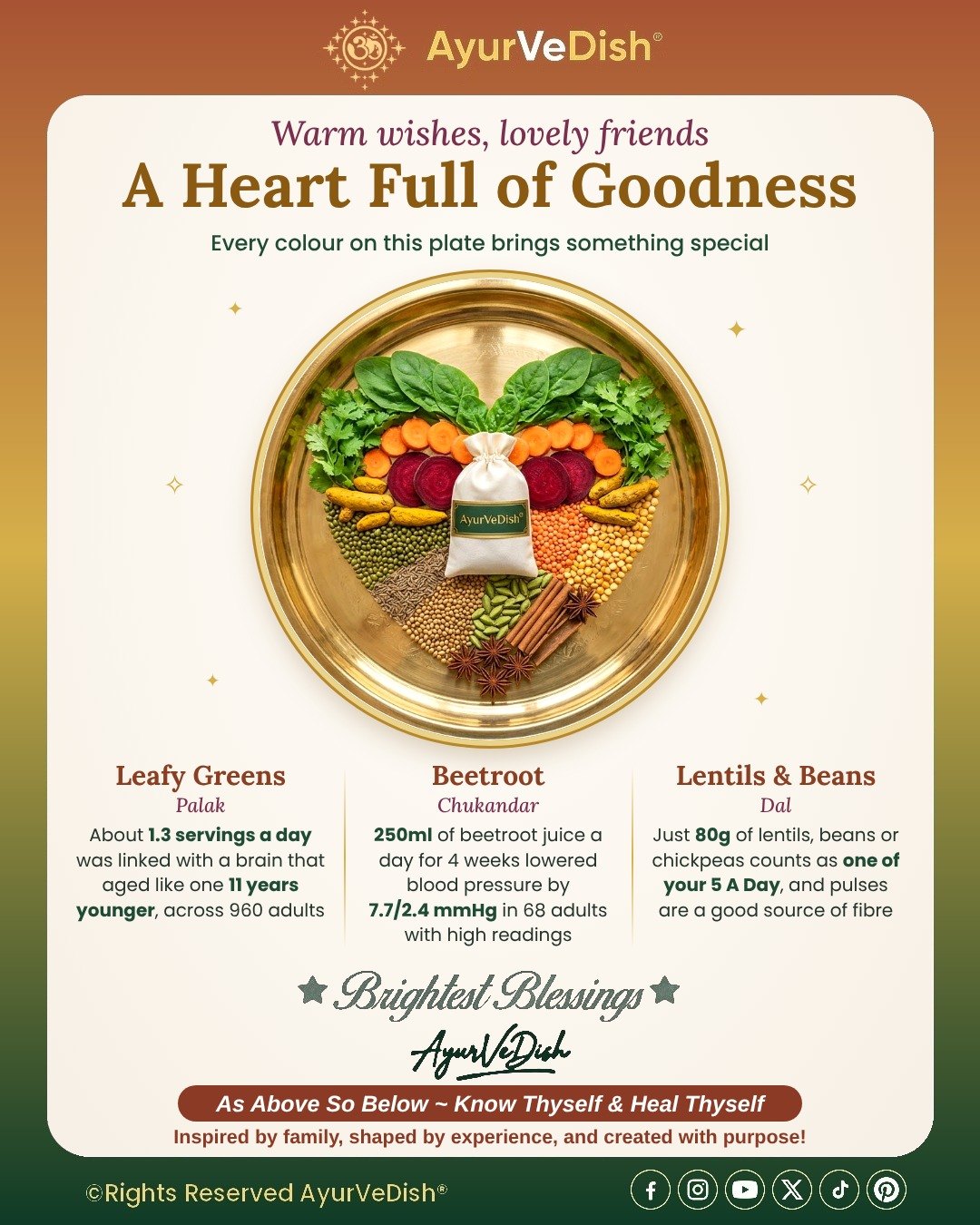
- Morris MC, Wang Y, Barnes LL, Bennett DA, Dawson-Hughes B, Booth SL. Nutrients and bioactives in green leafy vegetables and cognitive decline: prospective study. Neurology 2018;90(3):e214-e222. pubmed.ncbi.nlm.nih.gov/29263222/
- Kapil V et al. Dietary nitrate provides sustained blood pressure lowering in hypertensive patients: a randomized, phase 2, double-blind, placebo-controlled study. Hypertension 2015;65(2):320-327. pubmed.ncbi.nlm.nih.gov/25421976/
- NHS. 5 A Day: what counts? (80g of pulses and beans). nhs.uk/live-well/eat-well/5-a-day/5-a-day-what-counts/
- Williams PG. Vitamin retention in cook/chill and cook/hot-hold hospital food-services. Journal of the American Dietetic Association 1996;96(5):490-498. pubmed.ncbi.nlm.nih.gov/8621875/